
ICU Setup at Home in Dhaka: The Complete Guide for Families in Bangladesh
The doctor’s words bring relief and fear at the same time: “The patient is stable now. You can continue the care at home.”
Relief — because your loved one survived the hardest days. Fear — because a ventilator, a monitor, a suction machine, and round-the-clock nursing suddenly become your responsibility. Where do the machines come from? Who runs them at 3 a.m.? What happens if the power goes out in the middle of the night?
This is exactly the situation an ICU setup at home is built for. Across Dhaka, more and more families are bringing hospital-grade critical care into their own bedrooms — with trained critical care nurses, medical equipment, doctor supervision, and a proper emergency plan. Done correctly, home ICU care is safe, deeply comforting for the patient, and far more affordable than an open-ended hospital ICU stay.
Done carelessly, it can be dangerous. That difference is what this guide is about.
We will walk you through everything: which patients truly qualify, the full equipment checklist, how nursing shifts work, how to prepare your room (including backup power — a very real Dhaka concern), what the care plan looks like week by week, and the mistakes we see families make again and again.
Key Takeaways
- A home ICU is suitable for medically stable patients who still need continuous monitoring, oxygen or ventilator support, tube feeding, or intensive nursing — not for patients in an active emergency.
- The core setup usually includes a hospital bed, air mattress, patient monitor, oxygen concentrator or cylinder, suction machine, and infusion support, matched to the doctor’s prescription.
- Critical care nurses in 8- or 12-hour shifts are the heart of the service; machines alone are never enough.
- A written emergency plan — nearest hospital, ambulance number, backup oxygen, and backup power — must exist before the patient comes home.
- Long-term home ICU care typically costs a fraction of a hospital ICU stay, while lowering the risk of hospital-acquired infections and keeping the family close.
- In Dhaka, a complete ICU setup at home can usually be arranged within 24 hours, and in urgent cases the same day.
What Is an ICU Setup at Home?
An ICU setup at home (also called home ICU or critical care at home) is a professionally organized system that recreates the essential functions of a hospital intensive care unit inside a patient’s residence.
It is not a single machine or a single nurse. It is a coordinated package of three things:
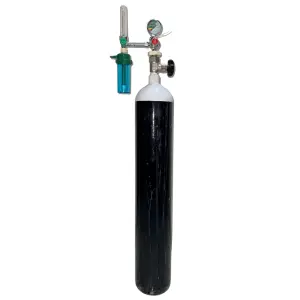
1. Equipment. The physical tools of critical care — an ICU-grade hospital bed, oxygen delivery (concentrator, cylinder, or both), a multipara patient monitor for heart rate, blood pressure, and oxygen saturation, a suction machine for airway clearance, and where prescribed, ventilator or BiPAP support, infusion pumps, and a nebulizer.
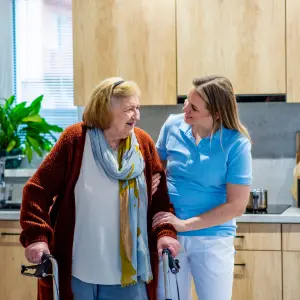
2. People. Trained critical care nurses who understand ventilated and tube-fed patients, working in rotating shifts so the patient is never unobserved. Depending on the case, a patient attendant or caregiver supports the nurse with hygiene, feeding, and positioning.
3. Protocols. A doctor-approved care plan, daily monitoring charts, infection control routines, medication schedules, and a clear emergency escalation plan. This is the invisible part — and the part that separates a genuine home ICU from a rented bed with a cylinder beside it.
When all three parts work together under medical supervision, the home becomes a safe extension of the hospital — quieter, warmer, and surrounded by the people the patient loves.
Why Families in Dhaka Are Choosing Home ICU Care
Ask any family that has spent weeks outside a hospital ICU in Dhaka, and you will hear the same story: one visitor allowed for ten minutes, a daily bill that never stops, and an elderly patient growing confused and withdrawn in an unfamiliar, brightly lit ward.
Hospital ICUs are irreplaceable for acute emergencies — that must be said clearly. But for the long tail of critical illness — the stable ventilated patient, the bedridden stroke survivor with a feeding tube, the end-stage patient whose family has chosen comfort-focused palliative care — a hospital ICU bed is often neither necessary nor kind.
Home ICU care answers four problems at once:
Cost. A hospital ICU charges for the bed, the ward, the equipment, and every service separately, every single day. At home, you pay for exactly the equipment and nursing hours your patient actually needs. International healthcare data consistently shows home-based critical care costing roughly one-third of an equivalent hospital ICU stay — and families in Bangladesh see similar proportions.
Infection. Hospital-acquired infections are a recognized global risk for long-stay patients; organizations such as the WHO and CDC have documented how vulnerable ICU patients are to resistant hospital germs. A clean, well-managed home environment with one patient and strict hygiene protocols dramatically reduces that exposure.
Family presence. At home, a spouse can hold the patient’s hand at midnight. Grandchildren can sit by the bed. For elderly, dementia, and palliative patients especially, familiar faces and familiar walls are genuine medicine — improving mood, sleep, and cooperation with care.
Dignity and comfort. The patient eats familiar food (where permitted), hears familiar sounds, and follows their own rhythm. Recovery — or a peaceful final chapter — happens on the family’s terms.
📞 Wondering if your patient qualifies? Call Nursing Home Care Service for a free assessment. Our coordinator will review the discharge summary with you and tell you honestly whether a home ICU is safe for your case. Request a nurse today.
Who Needs an ICU Setup at Home — and Who Doesn’t
Honesty matters more here than anywhere else on this page. A home ICU is the right choice for many patients — and the wrong choice for some. Here is the truthful picture.
Patients who benefit most
- Long-term ventilator or BiPAP-dependent patients who are otherwise stable — for example, advanced COPD or neuromuscular conditions
- Stroke patients who are bedridden, tube-fed, or need tracheostomy care after the acute phase has passed
- ICU-discharged patients whose doctors advise continued intensive monitoring during recovery
- Bedridden patients with feeding tubes (PEG/Ryles tube), urinary catheters, or complex wound care needs
- Cancer patients and palliative care patients whose families have chosen comfort-focused care at home
- Elderly patients with multiple conditions — heart failure, kidney disease, diabetes — who need continuous observation and oxygen support
- Post operative patients after major surgery who need short-term intensive monitoring before stepping down to regular home nursing care
Patients who should stay in hospital
- Patients whose vital signs are not yet stable, or who need medications adjusted hour by hour
- Patients requiring dialysis, active resuscitation, or emergency surgical intervention
- Patients whose doctors have not approved discharge to home care
The rule is simple: a home ICU continues stabilized critical care; it does not replace emergency hospital treatment. Any provider who promises otherwise should worry you. At Nursing Home Care Service, our critical care coordinator reviews every case against the treating doctor’s advice before we accept it — and we will tell you plainly if hospital care remains the safer option.
Signs It’s Time to Consider a Home ICU
Families often ask, “How do we know when to make the move?” These are the practical signals:
- The treating doctor says the patient is stable but will need long-term support — ventilation, oxygen, tube feeding, or continuous monitoring
- The hospital team starts discussing discharge planning or “long-term care options”
- ICU bills are consuming savings while the patient’s condition is no longer changing day to day
- The patient is emotionally deteriorating in the hospital — agitation, confusion, refusal to eat, depression
- Your family is exhausted from hospital shuttling — meals, visiting hours, overnight waiting
- The patient themselves keeps asking to go home
If two or more of these sound familiar, request a home ICU assessment. It costs nothing to ask, and it gives your family a clear picture of what going home would actually involve.
Benefits of ICU Setup at Home
- One-to-one nursing attention — a dedicated critical care nurse for your patient alone, something no hospital ward can match
- Major cost savings compared with an open-ended hospital ICU stay
- Sharply reduced risk of hospital-acquired infections for long-stay patients
- Unlimited family presence — no visiting hours, no ten-minute limits
- Faster emotional recovery in familiar surroundings, especially for elderly and dementia patients
- Better sleep — no ward alarms, corridor noise, or constant lighting
- Personalized care plan built around your patient’s exact condition and routine
- Continuous health monitoring with a multipara monitor and daily charting shared with your doctor
- Safe medication management — every dose given on time and recorded
- Professional airway care — suction, tracheostomy care, and oxygen titration by trained hands
- Tube feeding done right — PEG/Ryles tube feeding with correct positioning and hygiene
- Bed sore prevention through air mattresses and scheduled repositioning
- Physiotherapy at home integrated into the plan to prevent stiffness and chest complications
- Less family exhaustion — professionals carry the medical load; you provide the love
- Dignity and privacy for the patient in their own room
- Smooth step-down — as the patient improves, the setup scales down to standard home nursing care
- A written emergency plan so the family always knows exactly what to do
- 24-hour backup support — equipment service, nurse replacement, and on-call guidance at any hour
Features of Our Home ICU Service
- Complete ICU setup at home arranged across Dhaka, usually within 24 hours
- Licensed critical care nurses — male nurse or female nurse as your family prefers
- 8-hour, 12-hour, and 24-hour shift plans with reliable nurse rotation
- Trained patient attendants and caregivers to support hygiene, feeding, and positioning
- Hospital bed rent — manual and motorized ICU-grade beds with side rails
- Air mattress for bed sore prevention included in bedridden care setups
- Oxygen cylinder service with refilling and oxygen concentrator support for continuous therapy
- Multipara patient monitor tracking pulse, blood pressure, SpO2, and temperature
- Suction machine, nebulizer, and infusion support as prescribed
- Ventilator and BiPAP coordination for doctor-approved respiratory cases
- Tracheostomy care, catheter care, and feeding tube care by experienced nurses
- Wound dressing, injection service, and IV infusion at home
- Home sample collection so lab tests happen without moving the patient
- Physiotherapy at home by qualified physiotherapists
- Daily monitoring charts and regular updates to your treating doctor
- Medical equipment rental with delivery, installation, and servicing
- Emergency escalation protocol prepared with your family before day one
- Transparent pricing — you approve the equipment list and nursing plan before anything is delivered
How the Service Works: Step-by-Step Process
Here is exactly what happens when you contact Nursing Home Care Service for an ICU setup at home in Dhaka:
- Call or message us. Share the patient’s condition and, if available, the hospital discharge summary. Our line is open 24 hours, including emergencies.
- Free clinical assessment. Our critical care coordinator reviews the case — by phone, video, or a home/hospital visit — and confirms whether home ICU care is safe and what it must include.
- Doctor’s plan confirmation. We align the setup with your treating doctor’s prescription: oxygen flow, feeding schedule, medications, and monitoring targets.
- Equipment list and quotation. You receive a clear, itemized plan — equipment, nursing shifts, and cost — before anything is delivered. No surprises.
- Room preparation guidance. We tell you exactly how to arrange the room: bed placement, power points, ventilation, and hygiene arrangement (details in the next section).
- Delivery and installation. Our team delivers, installs, and tests every machine at your home, and trains the family on basic alarms and do’s and don’ts.
- Nurse deployment. Verified critical care nurses begin their shifts, hand over to each other with written notes, and start the daily monitoring chart.
- Ongoing supervision and review. Our supervisor checks in regularly, coordinates with your doctor, replaces equipment or staff whenever needed, and scales the setup up or down as the patient’s condition changes.
From the first phone call to a running home ICU, the process typically takes a few hours to one day within Dhaka city.
📞 Ready to start? Book an ICU setup at home now, or ask us to assess your patient’s discharge summary first — the assessment is free. Contact Nursing Home Care Service, 24 hours.
Preparing Your Home: Room, Power, and Hygiene
This is the section most guides skip — and the one Dhaka families need most.
Choose the right room. Pick a well-ventilated room with a window, close to a bathroom, with space to walk around three sides of the bed. Avoid rooms facing heavy street noise if possible; rest is treatment.
Plan the power — seriously. A concentrator, monitor, and suction machine all draw electricity, and load-shedding or sudden outages are a reality in parts of Dhaka. Before the patient arrives: confirm which sockets the machines will use, arrange an IPS/UPS or generator line for the concentrator and monitor at minimum, and always keep a filled backup oxygen cylinder beside the bed with a family member trained to switch over. Our installation team checks all of this on day one.
Set the hygiene standard. One dedicated table for medicines and dressing supplies, hand sanitizer at the door, shoes off in the patient room, limited visitors during the early weeks, and daily cleaning with a disinfectant solution. Infection control at home is simpler than in a hospital — precisely because you control who enters.
Prepare the family. Decide who is the primary contact for nurses, save the ambulance and hospital numbers on everyone’s phone, and put the written emergency plan on the wall where every family member can see it.
A well-prepared room takes one afternoon to arrange — and it is the foundation of everything that follows.
A Typical Home ICU Care Plan
While every plan is personalized, most home ICU cases in our service follow a rhythm like this:
Daily, every shift: vital signs charting (pulse, BP, SpO2, temperature), scheduled medications and injections, tube feeding at prescribed intervals, suction as needed, repositioning every two hours, oral and skin hygiene, and intake-output recording.
Daily, once: full bed bath and linen change, wound dressing where applicable, bowel and catheter care review, and a short written summary the family can read.
Weekly: review call or visit with the supervising nurse, coordination with the treating doctor on medication or oxygen adjustments, physiotherapy progression, and equipment servicing checks.
Monthly: full care plan review — is the patient improving enough to step down to regular home nursing? Does anything need to be added? The goal is never to keep equipment in your home a day longer than the patient needs it.
Safety Tips Every Family Must Follow
- Never adjust oxygen flow or ventilator settings yourselves. Only the nurse, following the doctor’s prescription, changes settings.
- Keep the backup cylinder full and the switch-over steps practiced. Every adult in the house should know how to do it.
- No smoking, incense, or open flame anywhere near oxygen equipment — this is a fire rule with zero exceptions.
- Wash or sanitize hands before touching the patient, every single time, for every person.
- Know the red-flag signs: falling SpO2, bluish lips, new fever, breathlessness, chest pain, sudden confusion, or a blocked feeding tube. Call the nurse’s supervisor and your doctor immediately.
- Keep the emergency plan visible — nearest hospital, ambulance number, doctor’s number, and our 24-hour line.
- Don’t crowd the room. Limit visitors, especially anyone with a cough, cold, or fever.
- Charge and test devices after every power outage, and report any machine alarm you don’t understand — never silence an alarm and hope.
Common Mistakes Families Make with Home ICU Care
- Renting machines without arranging trained nursing — equipment without expertise is a false economy and a real danger
- Bringing home a patient the doctor has not cleared for discharge
- Skipping the backup oxygen and backup power arrangements until the first crisis
- Letting untrained relatives perform suction, tube feeding, or dressing changes
- Ignoring small changes — a little more drowsiness, a little less urine — that a monitoring chart would have caught
- Choosing a provider on price alone, without checking nurse verification, supervision, and 24-hour backup
- Stopping physiotherapy and repositioning because “the patient is resting” — stiffness, clots, and bed sores arrive quietly
- Delaying the step-down decision — keeping a full ICU setup after the patient has improved wastes money and keeps the household in crisis mode
Avoiding even three of these mistakes can change your patient’s entire outcome — and your family’s peace of mind.
Professional Advice from Our Critical Care Team
Our senior critical care nurses give every Dhaka family the same three pieces of advice:
“First, plan the home ICU while the patient is still in hospital — the smoothest transfers are arranged two or three days before discharge, not the night after. Second, treat the monitoring chart as sacred; it is how small problems stay small. Third, take care of yourselves. A rested family makes better decisions than an exhausted one — that is why the nurse is there.”
They also remind families that a home ICU is not only about machines and survival. For palliative and end-stage patients, it is about comfort, closeness, and dignity — care that honors both the patient’s medical needs and the family’s love. Global bodies like the WHO consistently emphasize that home-based and palliative care are essential parts of a humane health system, not a lesser alternative.
📞 Talk to a critical care coordinator now. Whether you need a full ICU setup at home, a critical care nurse for night shifts, or just honest advice on your discharge summary — call Nursing Home Care Service. We answer 24 hours a day.
Serving Families Across Dhaka
Nursing Home Care Service provides ICU setup at home throughout Dhaka, Bangladesh. Our equipment vans and critical care nurses reach families in Banani and the surrounding diplomatic zone daily, and we maintain fast response times for apartment buildings around Nikunja 2 near the airport corridor. Families in Shyamoli and Khilgaon regularly use our long-term ventilator and tracheostomy care support, while our teams also serve the older neighborhoods of Wari, where narrow lanes are no barrier — our staff carry and install everything themselves. If you have been searching for an “ICU setup at home near me” in Dhaka, we are already working in your area.
Conclusion
An ICU bed does not heal a patient. Attention does. Skill does. Love does.
An ICU setup at home brings all three together: hospital-grade equipment, critical care nurses who never leave your patient’s side, and a family finally allowed to stay close. For stable patients facing weeks or months of critical support, it is safer than families fear, kinder than any ward, and far more affordable than an endless hospital bill.
Start with one honest conversation — with your doctor, and with us.
Nursing Home Care Service — trusted 24-hour home healthcare across Dhaka, Bangladesh. Call now to book an ICU setup at home, hire a critical care nurse, rent a hospital bed or oxygen concentrator, or request a free patient assessment. Emergency and same-day service available.
KEY TAKEAWAYS (SUMMARY BOX)
- Home ICU care suits stable patients needing long-term critical support — never active emergencies
- The setup = equipment + critical care nurses + protocols, all under doctor supervision
- Prepare the room, backup power, and backup oxygen before the patient arrives
- A written emergency plan is non-negotiable
- Costs run at a fraction of hospital ICU billing, with better comfort and lower infection risk
- In Dhaka, setup is typically completed within 24 hours — same-day in urgent cases
PEOPLE ALSO ASK
- What is included in an ICU setup at home? Typically a hospital bed with air mattress, oxygen concentrator and backup cylinder, multipara monitor, suction machine, nebulizer, infusion support, and trained critical care nurses in shifts — customized to the doctor’s prescription.
- Is ICU care at home safe in Bangladesh? Yes, for doctor-cleared stable patients, when equipment, trained nurses, supervision, and an emergency plan are all in place through a professional provider.
- Which patients qualify for a home ICU? Stable patients needing long-term ventilation or oxygen, tracheostomy or tube-feeding care, bedridden stroke or cancer patients, and ICU-discharged patients needing continued monitoring.
- Can a ventilator patient be kept at home? Yes — with doctor approval, a properly installed ventilator with power and oxygen backup, and ICU-trained nurses on 24-hour shifts.
- How quickly can an ICU be set up at home in Dhaka? Usually within 24 hours of assessment; urgent cases can often be arranged the same day within Dhaka city.
- Is home ICU cheaper than hospital ICU? Yes — because you pay only for the equipment and nursing your patient needs, long-term home ICU care typically costs a fraction of hospital ICU billing.
- Do I need a doctor’s permission for ICU at home? Yes. The treating doctor must confirm the patient is stable for discharge, and the home care plan should follow their written prescription.
- What happens during a power cut with home ICU equipment? A prepared setup includes IPS/UPS or generator backup for key machines plus a filled backup oxygen cylinder, with the family trained to switch over safely.
- Who operates the ICU machines at home? Trained critical care nurses operate and monitor all equipment; families are taught only basic safety awareness, never clinical adjustments.
- Can the home ICU be reduced as the patient improves? Yes — a good provider steps the setup down to regular home nursing care as soon as the doctor confirms improvement.
FREQUENTLY ASKED QUESTIONS
1. What exactly is an ICU setup at home? It is a complete critical care arrangement at your residence — ICU-grade equipment, trained critical care nurses in shifts, and doctor-guided protocols — for stable patients who still need intensive support.
2. Which areas of Dhaka do you cover? We serve neighborhoods across Dhaka city, from central and old Dhaka to the airport corridor. Call with your address and we will confirm availability, including night and emergency requests.
3. How fast can you install everything? Within Dhaka, a full setup is usually running within 24 hours of assessment. Urgent same-day installation is possible in many areas.
4. Do you provide both male and female nurses? Yes. You can request a male nurse or female nurse, and we match critical care experience to your patient’s condition.
5. What shift options are available? 8-hour, 12-hour, and full 24-hour coverage. Most home ICU cases run two 12-hour nursing shifts, often supported by a caregiver or patient attendant.
6. Can you manage a tracheostomy patient at home? Yes. Tracheostomy care — suction, cleaning, tube care, and emergency protocols — is one of our core critical care services.
7. Do you handle feeding tubes and catheters? Yes. Our nurses manage PEG and Ryles tube feeding, urinary catheter care, IV infusion, injections, and sterile wound dressing at home.
8. Is the equipment rented or purchased? Either. Most families rent through our medical equipment rental service — hospital beds, oxygen concentrators, monitors, suction machines — with delivery, installation, and servicing included.
9. What if a machine fails at night? Call our 24-hour line. We provide replacement equipment and on-call guidance, and every setup includes backup oxygen from day one.
10. Will you coordinate with our own doctor? Always. The care plan follows your treating doctor’s prescription, and our nurses share monitoring charts and report changes to the doctor and family.
11. Is home ICU suitable for palliative or end-stage patients? Yes. For families choosing comfort-focused care, we provide palliative-oriented home ICU support emphasizing pain control, dignity, and family closeness.
12. How much does ICU setup at home cost in Bangladesh? Cost depends on the equipment list and nursing hours your patient needs. You receive a transparent itemized quotation before delivery — and it is typically far below ongoing hospital ICU billing. Call for an exact quote.
13. Can lab tests be done without moving the patient? Yes. Our home sample collection service brings phlebotomists to your door, and reports are shared with your doctor.
14. What do we need to prepare at home? A ventilated room near a bathroom, reliable power points with IPS/UPS or generator backup, and basic hygiene arrangements. We guide you through everything before installation.
15. How do we book right now? Call Nursing Home Care Service or message us through . Our coordinator is available 24 hours, every day — including government holidays.