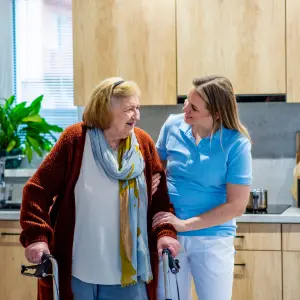


Patient Care Service at Home: Everything You Need to Know
Nobody plans for this. One evening your father is arguing about cricket, and the next he is in a hospital bed with a drip in his arm and a doctor talking about “long-term support.” Three days later somebody hands you a discharge summary and says he can go home — and the whole weight of what happens next lands on your family.
That gap, between the hospital’s responsibility ending and your family’s ability beginning, is exactly what patient care service at home exists to fill. It is professional nursing and caregiving delivered inside your own house: the injections, the dressings, the bathing, the turning, the feeding, the watching. It is not a luxury and it is not only for the wealthy. Across Dhaka it has become the ordinary way families manage recovery, ageing and chronic illness.
This guide is the complete version — the one we wish every family had before the discharge day rather than after it. What the service includes, what it does not, how needs change over time, what to prepare in the room tonight, what a proper care plan looks like on paper, and how to tell a serious provider from a phone number that answers cheerfully and disappears by week three.
What Is Patient Care Service at Home?
Patient care service at home means bringing the care a patient would otherwise receive in a hospital ward — minus the emergency infrastructure — into their bedroom. A trained team comes to the house on a fixed schedule, follows the treating doctor’s plan, records what they do, and reports back to the family.
It generally divides into two layers that work together:
1. Clinical care
Delivered by registered nurses: injections, IV infusion, wound dressing, catheter care, Ryles and PEG tube feeding, tracheostomy care, oxygen management, vital signs monitoring, blood sugar checks, and execution of the prescribed medicine schedule. Nurses also carry the responsibility of noticing when something is going wrong and escalating it.
2. Daily living care
Delivered by trained caregivers and patient attendants: bathing, toileting, diaper changes, oral care, feeding, two-hourly position changes, mobility support, prescribed exercise between physiotherapy sessions, medicine reminders, and companionship.
Around these two layers sit the supporting services most families end up needing: physiotherapy at home, doctor home visits, home sample collection for blood and urine tests, and medical equipment — hospital bed, air mattress, oxygen cylinder, oxygen concentrator, wheelchair, suction machine.
The best arrangements are not a menu order. They are a plan built around one specific patient’s task list.
What’s Included — and What Isn’t
Being clear about limits is part of being a trustworthy provider, so here it is plainly.
Home patient care does include: skilled nursing procedures, continuous or shift-based supervision, hygiene and mobility support, feeding assistance, medication administration and reminders, vital sign monitoring, documentation, family training, coordination with your doctor, physiotherapy and rehabilitation support, equipment supply, and rapid escalation when the patient deteriorates.
Home patient care does not include: emergency resuscitation facilities, surgery, blood transfusion in most home settings, advanced ventilation without specialist arrangement, diagnostic imaging, or the immediate multi-specialist response a hospital can mobilise in minutes. It also does not replace your treating doctor — a home nurse executes the plan, she does not write it.
And a boundary families often blur: a patient caregiver is not a domestic worker. Cooking for the whole household, cleaning the flat and running errands are not part of patient care, and every hour spent on them is an hour taken away from the patient. Where families need both, the honest answer is to hire both.
Why Home Patient Care Has Grown So Fast in Bangladesh
Anyone who worked in Dhaka healthcare ten years ago will tell you the shift has been dramatic. Several forces pushed it:
Hospital beds are expensive and scarce. For a stable patient who needs supervision rather than intervention, a hospital bed is the wrong use of both the family’s money and the country’s limited capacity.
Families got smaller and busier. The joint family that once absorbed a bedridden grandmother has been replaced by two working adults in a flat in Farmgate with a school run and no spare pair of hands.
Children live abroad. A very large share of our enquiries come from sons and daughters in the Gulf, Europe, North America and Australia, arranging care for parents they cannot reach quickly.
Chronic illness is rising. Stroke, diabetes and its complications, cancer, dementia and Parkinson’s all produce patients who are medically stable but need years of support, not days.
Infection risk is better understood. Since the pandemic, families think differently about keeping a frail patient inside a crowded ward when the same care can be delivered at home. The WHO has for years described home-based and long-term care as an essential pillar of ageing health systems, and Bangladesh is now living that transition in real time.
The Four Phases of Patient Care at Home
This is the part almost no local provider explains, and it is the single most useful thing a family can understand. Home care is not one static arrangement. It moves through phases, and the staffing, cost and equipment should move with it.
The Transition (Days 1–7)
The riskiest week. The patient has just left a monitored environment, medicines have changed, and the family is exhausted and unsure. Readmissions cluster in this period, usually from infection, dehydration, medication errors or falls.
What it needs: the highest intensity of the whole journey. Nurse presence or frequent visits, equipment already installed before arrival, a written medicine chart, and someone awake at night. Do not economise here. Spend heavily for one week rather than moderately for one month in hospital.
Stabilisation (Weeks 2–6)
Wounds close, drains come out, sugars settle, appetite returns. The clinical workload starts falling and the functional workload — walking, sitting, bathing, eating — becomes the main event.
What it needs: nurse visits reduce from continuous to scheduled. Caregiver hours become the backbone. Physiotherapy usually starts or intensifies. This is the natural point for the first cost reduction, and any provider who does not offer one is not paying attention.
Maintenance (Months 2–12)
The condition is now predictable. The patient may be independent, semi-dependent, or permanently bedridden — but stable. The risks shift from acute complications to slow ones: pressure sores, contractures, muscle wasting, depression, weight loss, isolation.
What it needs: consistency more than intensity. The same familiar caregiver, a fixed routine, monthly nurse reviews, ongoing exercise, and real attention to mood and dignity. Families in Mirpur 1 often tell us this is the phase where a good caregiver becomes part of the household.
Long-Term or Palliative
Either lifelong support for a chronic condition, or comfort-focused palliative care for a life-limiting illness.
What it needs: pain and symptom control, skin protection, gentle handling, emotional support for the whole family, and — this matters — relief shifts so that no single person, hired or related, is carrying it alone.
The practical lesson: ask your provider at the start, “How will this plan change in six weeks?” A provider with a real answer is a provider who understands care. One who quotes the same package indefinitely is selling hours.
Who Needs Patient Care Service at Home?
- Post-surgery patients discharged with wounds, drains, sutures or restricted mobility.
- ICU-discharged patients who remain fragile, oxygen-dependent or partly ventilated.
- Elderly parents who live alone, have fallen, or can no longer manage bathing and meals safely.
- Stroke survivors needing daily rehabilitation support and fall prevention.
- Bedridden patients of any age, where the priority is skin, hygiene, nutrition and positioning.
- Dementia and Alzheimer’s patients requiring supervision, routine and gentle redirection.
- Parkinson’s patients managing tremor, rigidity, medication timing and high fall risk.
- Cancer patients during and between treatment cycles — symptom control, nutrition, port and line care.
- Chronic disease patients with diabetes, kidney disease, heart failure or COPD needing regular monitoring.
- Palliative patients whose family has chosen comfort and home over further hospitalisation.
- Patients with tubes and lines — catheter, Ryles tube, PEG tube, tracheostomy.
- Families living abroad who need trained, supervised, reporting care for a parent in Dhaka.
Signs Your Family Needs Professional Help Now
Families usually wait too long. These are the signals that the arrangement has already stopped working:
- Someone in the family has stopped going to work, or stopped sleeping properly, to provide care.
- The patient has fallen — even once, even without injury.
- Medicines are being given from memory, or doses are being missed.
- A red or broken patch of skin has appeared on the back, heel, hip or tailbone.
- Weight is dropping, or meals are being refused regularly.
- Family members are arguing about care decisions and duties.
- Wound dressing or tube feeding is being done by untrained hands.
- The patient is confused, drowsy or breathless in ways nobody can explain.
- You have returned to a hospital emergency department more than once in a month.
- The patient’s dignity is being compromised because nobody is comfortable with bathing or toileting.
If two or more of these apply, the correct time to arrange patient care service at home was last week.
Building the Right Team: Nurse, Caregiver or Both
The rule is simple: assign every task to the lowest-qualified professional who can perform it safely.
Anything involving a needle, a tube, sterile technique or a clinical decision requires a registered nurse. Everything else — bathing, feeding, turning, walking, watching — belongs to a trained caregiver. Most long-term patients need a caregiver for the hours and a nurse for the procedures, not one professional trying to do both at the wrong price.
For a fuller breakdown of who can legally and safely do what, see our detailed comparison of a professional caregiver versus a home nurse. The short version: match the staff to the task list, review it every fortnight, and never let anyone perform a procedure outside their training, however urgent it feels at 2 a.m.
Preparing Your Home Before the Patient Arrives
This is the section families skip, then regret. The room you prepare determines how good the care can be.
The bed
A hospital bed with adjustable height and back elevation is the single highest-value item you can arrange. It prevents caregiver back injury, allows safe feeding at 30–45 degrees, and makes dressing changes possible without contortion. Add an air mattress for any patient who cannot turn independently — pressure sores are far cheaper to prevent than to heal. Place the bed with access from both sides if the room allows, away from direct fan draught, and near a window if you can manage it. Daylight matters more to recovery than most families expect.
The bathroom
Grab rails beside the commode and inside the shower area. A non-slip mat. A plastic stool for seated bathing. Adequate lighting, including at night. In Dhaka’s older flats, high thresholds are a common fall cause; a small ramp or a removed lip solves it.
The care corner
One table, within arm’s reach, holding: the medicine box, thermometer, blood pressure machine, glucometer if diabetic, pulse oximeter, gloves, hand sanitiser, dressing materials, tissue, and the written charts. Everything the staff need should be in one place, not spread across three rooms.
Power and backup
Load-shedding is a real clinical risk when a patient depends on an oxygen concentrator, suction machine or air mattress pump. Arrange an IPS or generator connection to the patient’s room, and keep a backup oxygen cylinder in the flat if the patient is oxygen-dependent. Families in Dakshinkhan and other outer areas should plan this before, not during, the first outage.
The information wall
Tape one A4 sheet beside the bed with: treating doctor’s name and number, diagnosis, drug allergies, blood group, current medicine list with timings, nearest hospital, ambulance number and the family’s emergency contact. In a crisis nobody remembers; everybody reads.
What a Real Care Plan Should Contain
If your provider has not given you a written plan, you do not have a service — you have an arrangement. A proper one includes:
- Patient details and diagnosis, with the treating doctor’s name and contact.
- A task list, written as duties, not adjectives: “turn every 2 hours”, not “good care provided.”
- Staff type and shift pattern — who is on duty, when, and who covers absence.
- Medicine schedule with drug names, doses, timings and route.
- Monitoring instructions — which vitals, how often, and the values that trigger a phone call.
- Nutrition plan, including consistency, quantity, timings and restrictions.
- Mobility and exercise plan coordinated with the physiotherapist.
- Equipment list installed in the home.
- Escalation protocol — who is called first, second and third, and when to call an ambulance.
- Review date — a specific date, usually fourteen days ahead, to reassess everything above.
Ask for it before duty begins. A provider who cannot produce one has never really been managing your patient’s care; they have been supplying a person.
BENEFITS OF PATIENT CARE SERVICE AT HOME
- One-to-one attention that no hospital ward staffing ratio can match.
- Lower total cost than an equivalent hospital stay for a medically stable patient.
- Reduced infection risk away from crowded wards and shared facilities.
- Faster functional recovery, because patients move, eat and sleep better at home.
- Better nutrition and hydration, with meals the patient actually recognises and accepts.
- Pressure sore prevention through disciplined two-hourly repositioning.
- Fall prevention with supervision, grab rails and a properly arranged room.
- Accurate medicine administration from a written chart rather than memory.
- Early detection of deterioration by someone who sees the patient hourly.
- Fewer emergency visits and readmissions, and therefore lower total spending.
- Family relief — spouses and adult children can work, rest and stay healthy.
- Preserved dignity during bathing, toileting and personal care.
- Emotional wellbeing, with familiar surroundings, family presence and routine.
- Continuity — the same familiar face, which matters enormously in dementia care.
- Daily reporting to family members, including those living abroad.
- Flexible, scalable plans that grow or shrink as the patient’s needs change.
- Coordinated services — nurse, caregiver, physiotherapy, doctor visit and equipment from one team.
- Better doctor consultations, because the daily record answers the questions doctors ask.
- Safe end-of-life care at home, surrounded by family, when that is the family’s choice.
- Peace of mind — the value families mention most often when the arrangement is working.
FEATURES OF OUR SERVICE
- 24/7 availability across Dhaka, including nights, weekends and public holidays.
- Registered nurses holding Bangladesh Nursing & Midwifery Council registration, verifiable on request.
- Trained, background-checked caregivers matched to your patient’s specific condition.
- Male and female staff available for every service.
- Free needs assessment by phone before booking, with an honest recommendation.
- Written care plan and itemised quotation shared before duty begins.
- Flexible shifts — hourly visits, 8-hour, 12-hour, 24-hour live-in, or a custom mix.
- Emergency and same-day placement for urgent hospital discharges.
- Complete clinical services at home — injections, IV infusion, wound dressing, catheter care, Ryles and PEG tube feeding, tracheostomy care.
- ICU setup at home with critical care nurses and monitoring equipment.
- Condition-specialised teams for stroke, dementia, Parkinson’s, cancer, palliative and bedridden care.
- Physiotherapy at home by licensed physiotherapists, coordinated with the nursing plan.
- Doctor home visits and home diagnostic sample collection.
- Medical equipment rental — hospital bed, air mattress, oxygen cylinder, oxygen concentrator, wheelchair, suction machine — delivered and installed.
- Daily documentation — vitals chart, intake-output record, medicine log and shift notes.
- Supervisor oversight with scheduled reviews and unannounced quality checks.
- Fortnightly plan reassessment, scaling care up or down honestly.
- Prompt staff replacement if the fit is wrong, at no extra charge.
- Family training so relatives can handle basic tasks confidently between shifts.
- Transparent pricing with no hidden charges, and confidential handling of all patient information.
SAFETY TIPS EVERY FAMILY SHOULD FOLLOW
- Verify credentials before duty starts, not after a problem — BNMC registration for nurses, training records for caregivers.
- Insist on written documentation. If nothing is recorded, nothing can be reviewed or shown to a doctor.
- Never allow scope creep. If the nurse is delayed, reschedule the procedure with medical advice; do not let an attendant attempt it.
- Protect the skin obsessively — two-hourly turns, dry linen, no wrinkles under the hips, daily heel and tailbone checks.
- Feed at 30–45 degrees upright and keep the patient upright for thirty minutes afterwards, especially where swallowing is impaired.
- Prepare medicines in a weekly box yourself, so reminders cannot become dosing errors.
- Practise strict hand hygiene before and after every contact — the CDC and WHO both rank it as the highest-value infection control habit in home care.
- Keep the floor clear and the room lit, with a night light and the bed at low height.
- Never run a single staff member for 24 hours long term. Fatigue is a safety failure, not dedication — use two shifts.
- Keep the emergency sheet visible and know in advance which hospital you would go to and how you would get there at 3 a.m.
COMMON MISTAKES TO AVOID
- Arranging care after discharge instead of before it. The best time to book is the day discharge is first discussed.
- Hiring by price rather than by task, then paying far more to fix a preventable complication.
- Skipping the room setup, so the family discovers on night one that the bed is unreachable from one side.
- Letting an untrained person handle tubes, wounds or injections because the situation felt urgent.
- Working without a written plan, which guarantees disputes about what was promised.
- Never reassessing — paying Phase 1 rates in Phase 3 for months.
- Excluding the treating doctor from the home care plan.
- Mixing household work into patient care duties, diluting both.
- Ignoring the family’s own health. Burnout in the primary relative is a clinical risk to the patient.
- Hiring informally through acquaintances, with no supervision, no replacement and no accountability if something goes wrong.
PROFESSIONAL ADVICE: CHOOSING A PROVIDER IN DHAKA
Home healthcare in Bangladesh is still lightly regulated, so the burden of quality control sits with you. These ten questions separate professionals from opportunists — a family in Siddheshwari used exactly this list last year and changed provider before a single shift began:
- Are your nurses BNMC registered? Ask for a number, not a reassurance.
- What training do your caregivers receive, and specifically with my patient’s condition?
- Who supervises the staff, how often, and what happens at 2 a.m. if something goes wrong?
- Will I receive a written care plan and itemised quotation before duty starts?
- What is your replacement policy if the staff member is absent or unsuitable?
- How and when will the plan be reviewed, and will the cost fall as my patient improves?
- Do you provide equipment, and is delivery and installation included?
- Can you coordinate with my own doctor and follow their instructions exactly?
- What is documented daily, and how will I receive it?
- Can I speak to a supervisor now, and meet the staff member before the first shift?
A provider who answers all ten comfortably is worth paying slightly more for. A provider who deflects even three is a risk you are taking with someone you love.
KEY TAKEAWAYS FOR BUSY FAMILIES
- Book before discharge, not after.
- Set up the bed, bathroom and care corner before the patient arrives.
- Match staff to the task list; nurse for procedures, caregiver for hours.
- Demand a written care plan with a review date on it.
- Expect the plan and the cost to change across the four phases.
- Document everything — it protects the patient and informs the doctor.
- Protect the family’s own health as part of the plan, not as an afterthought.
CONCLUSION
Bringing a patient home is not a step down from hospital care. Done properly, it is a step up — one professional focused entirely on one patient, in a room where they sleep well, eat food they recognise, and see the people they love without waiting for visiting hours.
What separates the families who manage this well from the ones who struggle is rarely money. It is preparation. A bed set up in advance. A task list written down. A licence checked. A plan with a review date. A provider who tells you honestly when you need less than you were about to buy.
Patient care service at home works when it is designed rather than improvised. If you are holding a discharge summary today, or watching an elderly parent slowly stop managing alone, start the conversation now — not on the day everything becomes urgent.
PEOPLE ALSO ASK
- What is patient care service at home? Professional nursing and caregiving delivered in the patient’s own home, covering clinical procedures and daily living support.
- What services are included in home patient care? Injections, IV therapy, wound dressing, tube feeding, catheter care, vitals monitoring, bathing, feeding, mobility support, physiotherapy and equipment.
- How much does patient care at home cost in Bangladesh? It depends on shift length, staff type and patient complexity; caregiver support costs less than skilled nursing. Ask for a written itemised quote.
- Is home care cheaper than hospital admission? For medically stable patients, usually yes — considerably, once bed charges, transport and attendant costs are counted.
- Can I get a nurse at home for just one injection? Yes, visit-based nursing is available for single procedures.
- Who provides patient care at home — a nurse or an attendant? Both. Nurses handle clinical tasks; trained attendants and caregivers handle daily living support.
- How quickly can home care be arranged in Dhaka? Often the same day, and emergency discharges are handled regularly.
- What equipment do I need at home for a bedridden patient? Usually a hospital bed, air mattress, and depending on the condition, oxygen support, wheelchair or suction machine.
- Is patient care service at home safe for serious patients? Yes, when staffing matches the clinical need and a doctor’s plan is being followed with proper monitoring.
- How do I choose a home care provider in Bangladesh? Check nurse registration, caregiver training, supervision, written care plans, replacement policy and transparent pricing.
FREQUENTLY ASKED QUESTIONS
1. What exactly is patient care service at home? It is professional healthcare provided in the patient’s residence — nursing procedures, daily living support, monitoring and documentation — arranged by visit, shift or around the clock.
2. Who is it suitable for? Post-surgery, post-ICU, elderly, bedridden, stroke, dementia, Parkinson’s, cancer, chronic disease and palliative patients.
3. Do I need a nurse or an attendant? A nurse for injections, IV, wounds, tubes and clinical decisions; a trained attendant or caregiver for bathing, feeding, mobility and supervision. Many patients need both.
4. How fast can you start? Frequently the same day. For planned discharges, book as soon as the date is known so equipment is installed before the patient arrives.
5. Do you serve all of Dhaka? Yes, across the city. Share your address and we will confirm your response time.
6. Are male and female staff available? Yes, both, for nursing and caregiving, on all shift patterns.
7. Do I need a doctor’s prescription? Clinical nursing services follow your treating doctor’s plan. Caregiver and attendant services require no prescription.
8. What shift options exist? Hourly visits, 8-hour, 12-hour, 24-hour live-in, or a mix of scheduled nurse visits with caregiver hours.
9. Do you supply medical equipment? Yes — hospital beds, air mattresses, oxygen cylinders, oxygen concentrators, wheelchairs and suction machines, with delivery and installation.
10. Will I get daily updates? Yes. Vitals, intake, medicines, mobility and mood are recorded every shift and shared with the family, including relatives overseas.
11. What happens if the patient’s condition worsens? The staff follow a written escalation protocol: inform the supervisor, contact the treating doctor, and arrange hospital transfer if required.
12. Can the plan be reduced as the patient improves? Yes, and it should be. We reassess every fortnight and adjust both care and cost.
13. What if we are not satisfied with the staff member? Tell your supervisor and we replace them promptly, without argument or additional charge.
14. Can you provide care in hospital as well? Yes, patient attendants and private nurses can support your patient at the hospital bedside.
15. How do we begin? Call Nursing Home Care Service or message through — describe the patient and our coordinator will build the plan from there.
CALL TO ACTION
Bringing a patient home? Do not improvise it. Tell us the diagnosis and the discharge date. We will build the care plan, install the equipment, and have the right professional at your door — often the same day.
📞 Call Now · 🏠 Book Home Nursing · 👩⚕️ Hire a Caregiver · 🩺 Request a Nurse · 🛏️ Book ICU Setup at Home · ⚙️ Rent Medical Equipment
Nursing Home Care Service — trusted, licensed and affordable patient care service at home across Dhaka, 24 hours a day.