

Critical Patient Care at Home: Benefits and Requirements Every Bangladeshi Family Should Know
“Can we manage him at home?”
A son asked us this last month, standing in a hospital corridor, holding his father’s discharge file. The old man had survived a severe stroke. He now needed tube feeding, oxygen support, suction every few hours, and constant observation. The hospital had done its job. The question was what came next.
The honest answer to that son — and to every family reading this — is: yes, you can, if four requirements are met. Critical patient care at home is neither a miracle nor a gamble. It is a discipline. When the doctor has cleared the patient, when a genuinely skilled critical care nurse is at the bedside, when the correct equipment is installed and tested, and when the family knows its role, home becomes one of the safest places a stable critical patient can be.
When any one of those four pillars is missing, home becomes risky. Most articles on this subject only tell you the good part. This one tells you both — the real benefits and the real requirements — so your family can make a decision you will never regret.
Quick Answer
Critical patient care at home means providing intensive, hospital-level nursing and monitoring to a stable but seriously ill patient in their own residence. Safe home critical care requires four things: written doctor clearance, a trained critical care nurse, condition-appropriate medical equipment, and a family prepared with a clear emergency plan.
Key Takeaways
- Critical patient care at home is for doctor-cleared, stable patients — ventilated, tube-fed, tracheostomized, bedridden, or oxygen-dependent — not for active emergencies.
- Safety rests on four requirements: medical clearance, a verified skilled nurse, correct equipment, and a prepared family.
- A critical care nurse is not the same as a general nurse or caregiver — matching the right professional to the patient’s condition is the single most important decision.
- Families should verify nurse credentials — training, critical care experience, and agency supervision — before anyone touches their patient.
- The benefits are substantial: one-to-one attention, lower infection exposure, family closeness, emotional recovery, and major savings compared with prolonged hospital ICU billing.
- Across Dhaka, professional critical care at home can begin within hours, 24 hours a day.
What Is Critical Patient Care at Home?
Critical patient care at home — sometimes called intensive care at home or home ICU care — is the continuous, skilled management of a seriously ill but medically stable patient inside their own residence.
The word continuous is what separates it from ordinary home nursing. A post-surgery patient might need a nurse for a few hours of wound dressing and medication. A critical patient needs unbroken observation: airway kept clear, oxygen levels watched, feeds given through a tube on schedule, position changed before pressure sores can form, and every small change in breathing, consciousness, or urine output noticed before it becomes a crisis.
In practice, home critical care combines three layers:
- Intensive nursing — a critical care nurse performing suction, tracheostomy care, tube feeding, catheter care, IV infusion, injections, and sterile wound dressing, while charting vital signs around the clock
- Health monitoring technology — a patient monitor, pulse oximeter, and where prescribed, ventilator or BiPAP support and an oxygen concentrator, turning the bedroom into a small observation unit
- Medical governance — the treating doctor’s written plan, a supervising service, daily records, and an emergency escalation path agreed in advance
Strip away any one layer and what remains is not critical care — it is hope. Our job, and this article’s job, is to replace hope with a system.
Why It Matters for Families in Bangladesh
Bangladesh’s hospitals do heroic work, but the arithmetic of critical illness is unforgiving. ICU beds are limited, demand is constant, and long-stay billing exhausts even well-prepared families. Meanwhile, global health bodies such as the WHO have long noted that hospital environments carry infection risks for long-stay, immunity-weakened patients — risks that a single-patient home, run with proper hygiene, largely avoids.
There is also a truth no invoice captures: Bangladeshi families want to care for their own. Our culture does not hand its parents to institutions easily. Home critical care honors that instinct — but pairs it with professional skill, so love is never asked to do a nurse’s job.
When the system is set up correctly, three things happen at once. The patient stabilizes in familiar surroundings and often becomes calmer and more cooperative. The family stops living in hospital waiting rooms and starts living with their loved one again. And the hospital ICU bed goes to the next emergency patient who truly needs it — a quiet public good that few people mention.
Who Needs Critical Patient Care at Home?
This service is designed for patients who have crossed the emergency phase but still depend on intensive support:
- Stroke patients with swallowing difficulty, paralysis, tube feeding, or tracheostomy
- ICU-discharged patients whose doctors advise continued intensive monitoring
- Ventilator or BiPAP-dependent patients with stable settings — advanced COPD, neuromuscular disease, or chronic respiratory failure
- Bedridden patients requiring feeding tube (PEG/Ryles tube) care, catheter care, and pressure-sore prevention
- Cancer patients in advanced stages needing symptom control, IV support, and skilled comfort care
- Palliative care patients whose families have chosen dignity-focused care at home
- Elderly patients with multiple organ conditions — heart, kidney, lung — who need continuous observation and oxygen concentrator support
- Dementia and Parkinson’s patients in late stages, where swallowing, mobility, and infection risks demand skilled nursing rather than general caregiving
If your patient fits one of these pictures and the treating doctor agrees the condition is stable, home critical care is a realistic, safe option.
Signs Your Family Needs This Service
- The doctor mentions “long-term care”, “supportive care”, or discharge with tubes, oxygen, or a tracheostomy in place
- Relatives are attempting suction, tube feeds, or position changes without training — and everyone is quietly terrified
- The patient has developed, or is developing, bed sores
- Hospital costs continue while the patient’s condition hasn’t changed in days
- The family’s health is collapsing — sleepless nights, missed work, constant anxiety
- Small emergencies keep happening at home: a blocked tube, a slipped catheter, an oxygen scare at 2 a.m.
Any one of these signs is a reason to call for a professional assessment. Two or more means the family is already carrying a clinical load it was never trained for.
The Four Requirements of Safe Critical Care at Home
Here is the framework we use for every case we accept — and the framework your family can use to judge any provider, including us.
Medical Clearance from the Treating Doctor
Nothing begins without this. The treating doctor must confirm, ideally in writing, that the patient is stable enough for home management, and the discharge summary must state the medications, feed schedule, oxygen prescription, and monitoring targets. A responsible service builds its entire care plan on that document — and coordinates with the doctor throughout, reporting changes and adjusting only on medical instruction. If a provider is willing to start critical care without seeing a doctor’s plan, walk away.
The Right Professional — Verified and Skilled
This is where families are most often misled, so let us be specific. For a critical patient, you need a nurse with recognized nursing education, current registration, and genuine hands-on experience with critical patients — suction, tracheostomy care, tube feeding, catheter care, IV infusion, and emergency response. Before any professional touches your patient, you are entitled to know: their qualification, their critical care experience, whether the agency has verified their identity and background, and who supervises them. At Nursing Home Care Service, every critical care nurse is credential-checked and works under a supervising coordinator — and we encourage families to ask us these questions directly. A trustworthy provider welcomes scrutiny; an untrustworthy one changes the subject.
The Right Equipment for the Condition
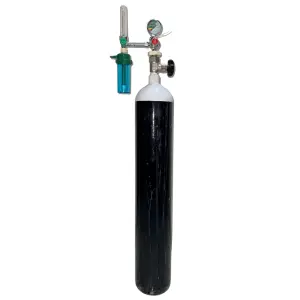
Equipment must match the prescription — no more, no less. A tracheostomy patient needs a reliable suction machine and spare tubes; an oxygen-dependent patient needs a concentrator plus a filled backup cylinder; a bedridden patient needs an ICU bed with an air mattress; a monitored patient needs a multipara monitor the nurse actually watches. Everything must be installed, tested on your home’s power supply, and backed by 24-hour replacement support. (For the full room-preparation and power-backup playbook, see our detailed guide to ICU setup at home.)
A Prepared and Informed Family
The final requirement is you. A safe home critical care system needs the family to know four things: the red-flag danger signs for their patient, the emergency plan (which hospital, which ambulance number, who decides), the hygiene rules of the patient room, and the boundary between family love and clinical tasks — encouragement, conversation, and presence belong to you; suction and medication belong to the nurse. We brief every family on all four points before care begins, and we put the emergency plan in writing.
Four requirements. When all four stand, home critical care is safe, humane, and remarkably effective. That is the honest standard — hold every provider to it.
Benefits of Critical Patient Care at Home
- Undivided one-to-one attention — your patient is the nurse’s only patient
- Continuous health monitoring with changes caught early, not at the next ward round
- Dramatically lower exposure to hospital-acquired infections for immunity-weakened patients
- Family beside the patient day and night — no visiting-hour heartbreak
- Emotional stability — familiar room, familiar voices, better sleep, less delirium in elderly patients
- Substantial savings versus open-ended hospital ICU billing
- Professional airway management — suction and tracheostomy care done safely, every time
- Correct tube feeding with the right position, rate, and hygiene
- Bed sore prevention through air mattresses and disciplined two-hourly repositioning
- On-time medication, injections, and IV infusion — recorded, never forgotten
- Skilled wound dressing with sterile technique
- Integrated physiotherapy at home to protect lungs, joints, and muscles
- Home sample collection so lab tests never require a risky patient transfer
- A written record the treating doctor can actually use at follow-up
- Relief for the family — sleep returns, jobs continue, health recovers
- Dignity for the patient — care in their own bed, on their own terms
- Scalable support — intensity steps up or down as the condition changes
- 24-hour emergency backup — equipment, staff replacement, and guidance at any hour
Features of Our Critical Care Service
- Verified critical care nurses — credentials, experience, and background checked
- Male nurse and female nurse options to respect family preference
- 8-hour, 12-hour, and 24-hour shift plans with disciplined written handovers
- Trained caregivers and patient attendants to pair with nursing shifts
- Complete ICU setup at home when the condition requires it — bed, monitor, oxygen, suction
- Ventilator and BiPAP care coordination for doctor-approved respiratory patients
- Tracheostomy care, feeding tube care, and catheter care as core competencies
- Injection service, IV infusion, and sterile wound dressing at home
- Oxygen cylinder service with refill logistics and oxygen concentrator support
- Hospital bed rent and full medical equipment rental with installation and servicing
- Physiotherapy at home by qualified physiotherapists
- Home sample collection with reports shared to your doctor
- Daily vitals charting and intake-output records reviewed by a supervisor
- Direct coordination with your treating doctor — we execute their plan, not our own
- Written family briefing and emergency plan before day one
- Supervisor check-ins and instant staff replacement if anything falls short
- Transparent itemized pricing approved by you before service begins
- True 24-hour availability across Dhaka, including emergencies and holidays
How the Service Works: Step-by-Step Process
- Contact us — call or message any hour with the patient’s condition and discharge summary if available.
- Free assessment — our critical care coordinator evaluates the case by phone, video, or visit, and confirms home care is safe.
- Doctor alignment — we translate the treating doctor’s prescription into a written care plan: feeds, medications, oxygen, monitoring targets.
- Team and equipment proposal — you receive an itemized recommendation: which professional(s), which shifts, which equipment, and the exact cost.
- Family briefing — we walk your family through the red flags, hygiene rules, and the written emergency plan.
- Setup and deployment — equipment is delivered, installed, and tested; the critical care nurse begins the first shift and opens the monitoring chart.
- Supervised care — nurses hand over in writing between shifts; a supervisor reviews charts and visits regularly; your doctor receives updates.
- Review and step-down — as the patient improves, we scale the service down toward standard home nursing — and tell you the moment full critical care is no longer needed.
From your first call, care can begin within hours anywhere in Dhaka.
A Day in a Home Critical Care Plan
What does this actually look like? A typical 24 hours for a tube-fed tracheostomy patient runs like this: vitals and chest check at shift start; scheduled tube feeds every few hours with head elevated; suction whenever secretions build; medications and IV infusion exactly on time; repositioning every two hours with skin inspection; oral care and a full bed bath once daily; catheter care and output measurement; an afternoon physiotherapy session; an evening written summary the family can read in two minutes; and through the night, a nurse who is awake so the family doesn’t have to be.
Multiply that by weeks, without a single missed step — that is the quiet miracle disciplined nursing delivers.
Safety Tips for Families
- Insist on seeing the doctor’s written plan — and make sure your provider follows it, not their own improvisation.
- Verify the nurse before day one — qualification, critical care experience, and agency supervision.
- Keep backup oxygen filled and backup power ready, and have every adult practice the switch-over.
- Ban smoking and open flames near oxygen equipment — absolutely no exceptions.
- Enforce hand hygiene for every person entering the patient room.
- Learn your patient’s specific red flags — falling SpO2, new fever, breathlessness, sudden drowsiness, reduced urine — and who to call first.
- Never silence a machine alarm you don’t understand; call the nurse’s supervisor.
- Keep the emergency plan on the wall, not in someone’s memory.
Common Mistakes to Avoid
- Hiring a general caregiver for a critical patient because the quote was lower — the most expensive “saving” a family can make
- Starting home care without doctor clearance or against medical advice
- Accepting a nurse without asking about qualifications, experience, or supervision
- Renting machines but skipping trained hands to run them
- Treating the monitoring chart as paperwork instead of the early-warning system it is
- Letting hygiene discipline fade after the first uneventful week
- Waiting for a crisis before arranging ambulance and hospital contacts
- Never reviewing the plan — either over-servicing a recovering patient or under-servicing a declining one
Professional Advice from Our Nursing Team
Our senior critical care nurses offer families three rules they have learned across hundreds of Dhaka homes:
“Rule one: the first 48 hours at home set the tone — keep visitors minimal, follow the chart exactly, and let the patient settle. Rule two: report the small things; a slightly faster pulse today is easier to fix than a collapse tomorrow. Rule three: the family’s job is love, not procedures. When relatives try to become nurses, both the care and the relationship suffer. Let each side do what it does best.”
They add one more point, echoed by international bodies like the WHO and NHS in their guidance on long-term and home-based care: consistency beats intensity. A steady, supervised routine protects critical patients better than heroic bursts of effort ever can.
Serving Families Across Dhaka
Nursing Home Care Service provides critical patient care at home across Dhaka, Bangladesh. Our nurses cover the busy residential blocks of Mohammadpur and the apartment towers of Gulshan 2 every day, and families in Mirpur 11 rely on our long-term tracheostomy and tube-feeding support. We routinely deploy same-day critical care nurses to Motijheel‘s surrounding residential lanes and maintain round-the-clock coverage in Rampura and nearby neighborhoods. If you have been searching for “critical patient care near me” in Dhaka, our team is already close by.
Conclusion
Critical illness asks two questions of every family: Can we keep our loved one safe? and Can we keep them close? For stable patients, critical patient care at home is how Bangladeshi families answer yes to both.
But the yes must be earned — through doctor clearance, a verified skilled nurse, the right equipment, and a family that knows its role. Meet those four requirements, and home becomes what it was always meant to be: the best room in the world to heal in.
Nursing Home Care Service — trusted, professional, 24-hour home healthcare across Dhaka, Bangladesh. Call now to request a critical care nurse, book an ICU setup at home, hire a caregiver, rent a hospital bed or oxygen concentrator, or get a free honest assessment of your patient’s needs.
PEOPLE ALSO ASK
- What is critical patient care at home? It is continuous, hospital-level nursing and monitoring provided to a stable but seriously ill patient at home — including airway care, tube feeding, oxygen support, and 24-hour observation under a doctor’s plan.
- What is required for critical care at home? Four things: written doctor clearance, a trained critical care nurse, condition-appropriate equipment with backups, and a family briefed on hygiene and the emergency plan.
- Can a critical patient be treated at home in Bangladesh? Yes — stable ventilated, tracheostomy, tube-fed, and bedridden patients are routinely managed at home in Dhaka by professional services with doctor coordination.
- What does a critical care nurse do at home? Suction and tracheostomy care, tube feeding, catheter and wound care, IV infusion, medication administration, continuous vitals monitoring, and emergency response.
- What is the difference between a caregiver and a critical care nurse? A caregiver handles non-clinical personal care like bathing and feeding assistance; a critical care nurse performs clinical procedures and monitors the patient’s medical condition.
- Is home critical care cheaper than hospital ICU? Yes, substantially — families pay only for the nursing hours and equipment their patient needs, instead of full daily hospital ICU billing.
- How do I verify a home nurse’s qualifications? Ask for their nursing qualification, registration, critical care experience, and confirmation that the agency has verified identity and background — a professional service will show you readily.
- Can ventilator patients stay at home? Yes, with doctor approval, stable settings, trained ICU nurses on continuous shifts, and full power and oxygen backup.
- What equipment is needed for a critical patient at home? Commonly an ICU bed with air mattress, oxygen concentrator plus backup cylinder, suction machine, patient monitor, and feeding/infusion supplies — matched to the prescription.
- How fast can critical care start at home in Dhaka? Professional services can usually assess, install equipment, and deploy a nurse within hours of the first call.
FREQUENTLY ASKED QUESTIONS
1. What conditions do you manage under critical patient care at home? Stroke with tube feeding or tracheostomy, ventilator/BiPAP dependence, post-ICU recovery, advanced cancer, late-stage dementia or Parkinson’s, palliative cases, and long-term bedridden patients.
2. Do you require a doctor’s approval before starting? Yes, always. We build the care plan on your treating doctor’s prescription and coordinate with them throughout the service.
3. How are your critical care nurses selected? Every nurse is credential-verified, experience-checked for critical care skills, identity-verified, and supervised by a coordinator — and we welcome families to ask about any nurse’s background.
4. Can I choose a male or female nurse? Yes. Tell us your family’s preference and we will match accordingly, without compromising on critical care skills.
5. What shift options do you offer? 8-hour, 12-hour, and 24-hour coverage. Most critical patients run two 12-hour nursing shifts, often paired with a caregiver for personal care support.
6. Do you provide the medical equipment too? Yes — hospital bed rent, oxygen cylinder service, oxygen concentrator support, suction machines, monitors, and full medical equipment rental with installation, testing, and 24-hour replacement backup.
7. Can you handle tracheostomy and feeding tube patients? Yes. Tracheostomy care and PEG/Ryles tube feeding are core services, performed with sterile technique and proper positioning every time.
8. What happens in an emergency at home? Every family receives a written emergency plan before day one — red-flag signs, the nearest suitable hospital, ambulance contact, and our 24-hour line. The nurse initiates the plan immediately if needed.
9. Do you serve old Dhaka and areas with narrow lanes? Yes. Our teams carry and install equipment by hand where vehicles can’t reach — no neighborhood in Dhaka is excluded.
10. Will the nurse keep records we can show our doctor? Yes. Daily vitals charts, feed and medication logs, and intake-output records are maintained and shared with your doctor at every follow-up.
11. Can physiotherapy be added to the plan? Yes — physiotherapy at home is strongly recommended for bedridden and neuro patients and integrates directly into the care schedule.
12. Is this service suitable for palliative patients? Yes. For families choosing comfort-focused care, we emphasize pain control, gentle handling, and dignity, with full family involvement.
13. How is the cost calculated? By the professionals, shifts, and equipment your patient actually needs. You receive a transparent itemized quotation before we begin — no hidden charges.
14. Can the service be reduced as the patient improves? Yes, and we will tell you proactively. Stepping down to standard home nursing care the moment it is safe saves money and signals real recovery.
15. How do I book right now? Call Nursing Home Care Service or message . We answer 24 hours a day, every day, including emergencies.