
Home Nurse for Elderly Patients: Benefits and Essential Care Tips
“Continue the injections at home. Check her pressure twice a day. Bring her back if the wound looks red.”
Doctors in Dhaka give discharge instructions like these every single day — and then the elderly patient goes home to a family with no medical training, no equipment, and no idea how to give an insulin injection or recognize a wound infection. This gap between hospital and home is exactly where a home nurse for elderly patients becomes essential.
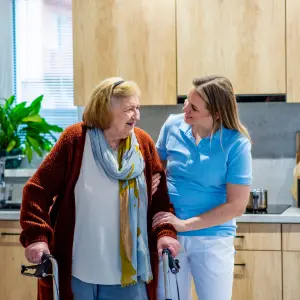
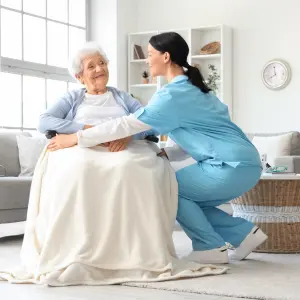
A licensed home nurse brings clinical skill to your parents’ bedside: injections and IV infusion, wound dressing, blood pressure monitoring, diabetes care, catheter care, and structured health assessment — all inside the home, without ambulance trips or waiting rooms. For seniors, that means safer recovery, better-managed chronic disease, and dignity preserved in familiar surroundings.
This guide explains what elderly home nursing actually covers, how a nurse differs from a caregiver, when your family needs one (or both), what a professional geriatric care plan looks like, the mistakes to avoid, and how to request a trusted, licensed male or female nurse anywhere in Dhaka through Nursing Home Care Service.
Quick Answer (Featured Snippet)
What does a home nurse for elderly patients do? A home nurse for elderly patients provides licensed clinical care at home, including injections, IV infusion, wound dressing, catheter and feeding tube care, blood pressure and diabetes monitoring, medication administration, and health assessment — either through scheduled visits or full 12–24 hour nursing shifts.
Key Takeaways
- A home nurse delivers clinical care, not just assistance. Injections, wound dressing, catheter care, and patient monitoring legally and safely belong to licensed nurses.
- Most elderly hospital readmissions are preventable. Skilled nursing at home catches infections, blood pressure spikes, and sugar fluctuations before they become emergencies.
- Nursing comes in two formats. Scheduled home visits suit stable seniors needing specific procedures; full-shift nursing suits post-surgical, post-stroke, and medically fragile patients.
- Nurses and caregivers work best together. A caregiver manages daily living while the nurse handles clinical tasks — one coordinated plan, one agency, no confusion.
- Nursing Home Care Service provides licensed male and female nurses across Dhaka 24 hours, alongside ICU setup at home, physiotherapy, home sample collection, and medical equipment rental.
What Is a Home Nurse for Elderly Patients?
A home nurse for elderly patients is a licensed nursing professional — with formal clinical training and registration — who delivers medical care to seniors in their own residence. Think of it as moving the skilled part of hospital care to the patient’s bedroom, under the treating doctor’s instructions.
The clinical scope is what sets a nurse apart. An elderly home nurse can administer prescribed injections (insulin, antibiotics, vitamins) through our injection service at home in Dhaka, run IV infusions, dress and monitor wounds, manage urinary catheters, handle feeding tubes (PEG or Ryles), suction and care for tracheostomies, record vital signs, and perform structured health assessments that get reported back to the physician.
Around those procedures sits continuous patient monitoring — the trained eye that notices a slightly elevated temperature, a wound edge turning red, swelling in the ankles, or confusion that wasn’t there yesterday. In geriatric care, catching these small signals early is often the difference between a quiet adjustment at home and an emergency admission.
In Bangladesh, professional home nursing is arranged through an agency that verifies each nurse’s credentials, matches nursing skills to the patient’s condition, coordinates with the treating doctor’s instructions, and supervises the quality of care throughout.
Formats of Elderly Home Nursing
- Scheduled nurse visits — a home visit nurse comes daily or weekly for specific tasks: an insulin injection, a dressing change, catheter replacement, or a vitals check.
- 12-hour nursing shifts — day or night clinical presence for seniors recovering from surgery or managing unstable conditions.
- 24-hour nursing care — round-the-clock licensed nursing for medically fragile, post-ICU, or palliative elderly patients.
- ICU setup at home — a critical care nurse plus hospital bed, monitors, oxygen, and suction equipment for seniors stepping down from intensive care.
Why Elderly Nursing Care at Home Matters
Ageing bodies carry medical complexity. By seventy, most seniors in Bangladesh live with at least one chronic condition — commonly diabetes, hypertension, heart disease, kidney impairment, or COPD — and many live with several at once. Each condition demands routine clinical attention: sugar readings, blood pressure monitoring, medication adjustments, and periodic tests.
The traditional answer was repeated hospital trips. But for an eighty-year-old with painful knees, every clinic visit means stairs, traffic, waiting rooms, and exhaustion — so check-ups get skipped, and small problems grow silently. Health authorities including the WHO and NHS have long promoted home-based care for older adults precisely because continuity beats crisis care: regular monitoring at home keeps chronic disease stable and hospitals free for emergencies.
There’s an infection argument too. The CDC consistently highlights that hospital environments expose vulnerable patients to healthcare-associated infections — a serious risk for seniors with weaker immunity. A wound dressed at home by a licensed nurse avoids that exposure entirely.
And there’s a uniquely Dhaka reality: adult children stuck in traffic between Motijheel offices and home simply cannot escort a parent to a clinic three times a week. A home visit nurse removes the logistics problem altogether — the clinic comes to the patient.
Who Needs a Home Nurse for Elderly Care?
Request a licensed home nurse if your elderly loved one is:
- A diabetic senior needing daily insulin injections, sugar monitoring, and diabetic foot care.
- A hypertensive or cardiac patient requiring regular blood pressure monitoring and medication administration under a doctor’s plan.
- A post-surgical patient discharged with stitches, drains, or dressings that need sterile clinical handling.
- A stroke survivor in recovery who needs positioning, feeding tube management, and nursing observation alongside stroke rehabilitation.
- A senior with a urinary catheter requiring scheduled changes and infection surveillance.
- A patient on PEG or Ryles tube feeding where feed schedules and tube hygiene must be clinically managed.
- A tracheostomy patient needing suctioning and airway care that only trained nurses should perform.
- An elderly cancer patient requiring injections, IV infusion, symptom management, or palliative nursing at home.
- A recently discharged ICU patient whose doctor has advised continuous skilled observation — often with an ICU setup at home.
- A senior with non-healing wounds or pressure sores that demand professional wound dressing and progress tracking.
Physicians, hospitals, and clinics routinely refer such patients to home nursing agencies at discharge — structured nursing at home is now a recognized bridge between hospital treatment and full recovery.
Signs an Elderly Patient Needs a Nurse — Not Just a Caregiver
Families sometimes hire a caregiver when the situation actually calls for clinical skill. These signs point to nursing:
- Prescribed injections or IV medication — no untrained person should push a needle.
- A wound that isn’t closing, oozes, smells, or shows spreading redness.
- Wildly swinging readings — blood sugar or blood pressure that jumps despite medicines.
- Any tube in the body — catheter, feeding tube, or tracheostomy.
- Post-operative drains, stitches, or dressings the hospital said must be managed sterile.
- Repeated emergency room visits for the same recurring problem.
- New medicines with monitoring requirements — blood thinners, insulin adjustments, strong antibiotics.
- Doctor’s explicit instruction for skilled observation, vitals charting, or clinical reporting.
If any of these apply, a caregiver alone is not enough — and asking one to perform clinical tasks puts your parent at genuine risk.
Home Nurse vs Elderly Caregiver: Roles Compared
The two professions complement each other — but they are not interchangeable:
| Aspect | Home Nurse (Licensed) | Elderly Caregiver |
|---|---|---|
| Core responsibility | Clinical procedures and medical monitoring | Daily living support and companionship |
| Can legally perform | Injections, IV infusion, wound dressing, catheter care, feeding tube care, tracheostomy care, medication administration | Feeding, bathing, mobility help, hygiene, medication reminders (not administration) |
| Reports to | The treating physician, with clinical documentation | The family and agency coordinator |
| Assessment skill | Formal health assessment — vitals, wound staging, symptom evaluation | Observation and reporting of visible changes |
| When essential | Active medical needs, post-surgery, unstable chronic disease | Frailty, memory loss, daily living difficulty |
| Typical engagement | Scheduled visits or clinical shifts | Long daily or live-in shifts |
| Relative cost | Higher per hour, reflecting licensure | More affordable for long-duration support |
The combination is often ideal: a diabetic, semi-mobile grandmother might have a caregiver from our caregiver service in Dhaka from morning to night for meals, bathing, and safety — with a nurse visiting each morning for her insulin injection and a weekly full assessment. Nursing Home Care Service designs exactly these blended plans daily.
Nursing Care at Home vs Extended Hospital Stay
For elderly patients who are stable but still need clinical care, home nursing wins on almost every measure:
| Factor | Nursing Care at Home | Extended Hospital Stay |
|---|---|---|
| Infection exposure | Minimal — one nurse, one patient, home environment | Elevated risk of hospital-acquired infections |
| Attention ratio | One-to-one dedicated nursing | One nurse shared across a ward |
| Sleep and appetite | Own bed, home food, family nearby — seniors eat and rest better | Disrupted sleep, unfamiliar food, visiting-hour limits |
| Mental state | Calm, oriented, surrounded by memories | Hospital delirium is a documented risk in elderly inpatients |
| Cost over weeks | A fraction of cabin rent plus hospital charges | Accumulates rapidly |
| Doctor connection | Nurse reports vitals and progress to the treating physician | Direct but shared physician attention |
| Right for | Stable, recovering, chronic, and palliative elderly patients | Acute, unstable, actively treated patients |
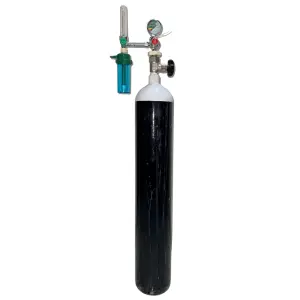
Even high-dependency seniors can transition home safely: with an ICU setup at home — hospital bed rent, monitors, oxygen concentrator support, suction, and a critical care nurse — families increasingly complete recovery in the patient’s own room rather than a hospital cabin.
Visit-Based vs Full-Shift Home Nursing
One decision families rarely think through in advance — and it drives both safety and cost:
| Factor | Scheduled Nurse Visits | Full-Shift Nursing (12/24 hr) |
|---|---|---|
| Format | Nurse comes for 30–60 minutes per task | Nurse stays through the shift |
| Best for | Stable seniors needing injections, dressings, catheter changes, or vitals checks | Post-surgical, post-stroke, post-ICU, and medically fragile seniors |
| Monitoring depth | Snapshot at each visit | Continuous observation and immediate response |
| Cost | Most affordable clinical option | Higher, matched to dependency level |
| Often paired with | A daytime caregiver for daily living | A caregiver on alternate shifts for personal care |
A practical rule from our coordinators: if a complication could become dangerous within hours, choose shifts; if care is task-based and predictable, choose visits. Needs also evolve — many families start with 24-hour nursing after discharge and step down to daily visits as the patient stabilizes.
Benefits of Hiring a Home Nurse for Elderly Patients
- Licensed clinical skill at the bedside — injections, IV infusion, and wound dressing done properly, sterile, and on schedule.
- Early detection of deterioration — trained assessment spots infection, dehydration, or cardiac warning signs days before a layperson would.
- Stable chronic disease — disciplined blood pressure monitoring and diabetes care keep readings inside the doctor’s targets.
- Correct medication administration — right drug, right dose, right time, documented; not just a reminder.
- Professional wound care — faster healing and far lower infection risk for surgical wounds and pressure sores.
- Safe tube management — catheters, feeding tubes, and tracheostomies handled to clinical standards.
- Fewer hospital readmissions — problems managed at home before they escalate.
- Zero travel burden — no more dragging a frail parent through Dhaka traffic for a five-minute injection.
- Reduced infection exposure — care delivered away from crowded clinics and wards.
- Structured documentation — a vitals and treatment chart the doctor can actually use at follow-up.
- Direct nurse-to-doctor reporting — changes communicated to the treating physician promptly.
- Faster post-operative recovery — seniors mobilize sooner and heal better with skilled support at home.
- Dignified intimate care — gender-matched male and female nurses for personal clinical procedures.
- Support for family decisions — a professional voice at home who can tell you when something genuinely needs a doctor.
- Seamless escalation — one agency link to physiotherapy at home, home sample collection, oxygen cylinder service, and ICU setup if needs increase.
- Peace of mind at night — with shift nursing, someone clinically trained is awake while the family sleeps.
Features of Our Elderly Home Nursing Service
- Licensed, registered male and female nurses with verified credentials
- Visit-based, 12-hour, and 24-hour nursing formats
- Critical care nurses for ICU setup at home and post-ICU seniors
- Free clinical needs assessment before any commitment
- Doctor-coordinated care — nursing delivered per the treating physician’s instructions
- Complete injection service — insulin, antibiotic, vitamin, IM, IV, and subcutaneous injections
- IV infusion at home with proper monitoring
- Wound dressing and pressure sore management with healing documentation
- Catheter care — insertion, scheduled changes, and infection surveillance
- Feeding tube (PEG/Ryles) care and feed schedule management
- Tracheostomy care including suctioning and airway hygiene
- Vitals charting — blood pressure, pulse, temperature, oxygen saturation, blood sugar
- Same-day and emergency nurse placement across Dhaka, 24 hours
- Caregiver + nurse blended plans under one coordinator
- Home sample collection so lab tests happen without travel
- Medical equipment rental — hospital bed rent, oxygen concentrator support, monitors, wheelchairs
- Replacement guarantee and supervisory quality checks on every engagement
- Transparent written quotations — no hidden charges
How to Request a Home Nurse: Step-by-Step
- Call the 24-hour line. Reach Nursing Home Care Service by phone or through the website — urgent requests, including night-time hospital discharges, are handled immediately.
- Share the medical picture. A coordinator asks about diagnoses, the doctor’s instructions, current medicines, mobility, and any tubes, wounds, or equipment involved.
- Get a clinical recommendation and quote. We advise visits, 12-hour, or 24-hour nursing — or a nurse-plus-caregiver combination — with clear written pricing.
- Nurse matching. We assign a licensed nurse whose experience fits the case: a diabetic senior gets a nurse strong in insulin management; a post-ICU patient gets a critical care nurse.
- Handover and setup. The nurse reviews prescriptions and discharge papers, sets up any rented equipment, and establishes the vitals chart and care documentation.
- Care begins with daily records. Every reading, dose, dressing, and observation is charted and shared with the family — and with the doctor at follow-ups.
- Supervision and step-down. Coordinators monitor quality, arrange instant replacements when needed, and scale the plan down (or up) as the patient’s condition changes.
Placement is fast: a family in Uttara Sector 11 calling after a morning discharge typically has a nurse at the door before evening, and most Dhaka placements complete within 24 hours.
What an Elderly Nursing Care Plan Includes
Here’s a realistic plan for an 82-year-old recovering at home after hip surgery, with diabetes and hypertension:
- Morning: vitals check (blood pressure, pulse, temperature, sugar), insulin injection before breakfast, morning medicines administered and charted, surgical wound inspection.
- Midmorning: sterile dressing change on alternate days, gentle repositioning, pressure-point skin check, coordination with the physiotherapist’s home rehabilitation exercises.
- Midday: hydration and nutrition oversight per the doctor’s diet plan, post-lunch sugar reading if prescribed, rest with elevation as advised.
- Afternoon: pain assessment, catheter output check and hygiene, mobility assistance for prescribed walking practice with the walker.
- Evening: second vitals round, evening medicines, diabetic foot inspection, wound status note in the chart.
- Night (24-hour nursing): scheduled position changes, monitoring for breathlessness, confusion, or fever — with a clear escalation protocol to the doctor and family.
Every plan also defines red-flag triggers — the specific readings or symptoms at which the nurse contacts the physician immediately. That written escalation rule is what turns home nursing from “someone present” into genuine clinical safety.
Essential Care Tips for Families of Elderly Patients
Even with a professional nurse involved, families remain part of the care team. These habits make the biggest difference:
- Keep one folder for everything medical — prescriptions, discharge summaries, test reports, and the nurse’s vitals chart — and take it to every doctor visit.
- Learn the target numbers. Ask the doctor what blood pressure and sugar ranges are acceptable for your parent, and make sure they’re written on the chart.
- Never adjust medicines yourselves. Doses change only on the physician’s instruction — the nurse documents, the doctor decides.
- Protect the skin of bedridden seniors. Repositioning every two hours and an air mattress (available on rent) prevent pressure sores that take months to heal.
- Watch hydration and swallowing. Coughing during meals or wet-sounding speech in a senior deserves prompt medical review.
- Take falls seriously — including near-misses. Report every stumble to the nurse; balance decline is measurable and often treatable with home rehabilitation.
- Keep infection basics tight. Hand-washing before wound or tube contact is non-negotiable — a standard Mayo Clinic and WHO guidance both stress for home care settings.
- Plan the emergency route in advance. Know which hospital, who drives, and who calls the doctor — decided calmly now, not during a crisis at 2 a.m.
- Care for the family caregiver too. Burnout in a spouse or daughter is a medical risk in its own right; shift nursing exists partly so families can sleep.
Common Mistakes When Arranging Elderly Nursing Care
- Letting untrained hands do clinical tasks. A neighbor giving injections or a helper changing catheters is how infections and injuries happen.
- Hiring a full-time nurse when visits would do — or the reverse: relying on brief visits for a patient who needs continuous observation.
- Skipping credential verification. Always confirm the nurse is licensed and agency-supervised; “experienced” is not a qualification. Our guide on how to choose the best home nursing service covers exactly what to verify.
- No written doctor’s instructions. Home nursing must follow the treating physician’s plan — insist the discharge summary and prescriptions guide the care.
- No documentation. If vitals and doses aren’t charted, the follow-up doctor is working blind.
- Stopping nursing too early. Wounds that look closed and sugars that look stable still need the doctor’s sign-off before care steps down.
- Ignoring the caregiver layer. A nurse handles procedures, but someone still needs to manage meals, hygiene, and companionship — a dedicated elderly care service in Dhaka covers exactly that layer, so plan both together.
- Choosing on price alone. One mismanaged wound or missed warning sign costs more — medically and financially — than months of proper nursing.
Professional Advice from Our Nursing Team
Our senior nurses — who have managed everything from post-stroke recoveries in Shyamoli to long-term palliative care in Baridhara — offer families this experience-tested guidance:
Match the nurse to the condition, not just the schedule. A nurse experienced in diabetic care reads a foot differently than a generalist. Tell the agency the exact diagnoses so matching is precise.
Insist on the chart from day one. Vitals, medicines, wounds, intake — written down daily. Doctors in follow-up consultations consistently make better decisions when a proper nursing record arrives with the patient.
Use home sample collection strategically. Regular blood tests without travel means the doctor adjusts treatment on real data — seniors whose tests happen on schedule stay stable longer.
Combine nursing with rehabilitation early. After stroke or surgery, pairing the nurse with physiotherapy at home in the first weeks protects mobility that is very hard to win back later.
Reassess every two weeks in the first two months. Recovery isn’t linear. Stepping down from 24-hour nursing to daily visits at the right moment saves money without sacrificing safety — and our coordinators will tell you when that moment arrives, even when it means we bill less. Families from Shantinagar to the far edges of the city tell us that honest step-down advice is what earns long-term trust.
People Also Ask
1. What does a home nurse do for elderly patients? A home nurse provides licensed clinical care to seniors at home — injections, IV infusion, wound dressing, catheter and feeding tube care, blood pressure and diabetes monitoring, medication administration, and health assessments reported to the treating doctor.
2. How much does a home nurse for elderly cost in Dhaka? Cost depends on format (visits vs 12-hour vs 24-hour shifts) and the clinical complexity of the case. Nursing Home Care Service provides a free assessment and a transparent written quotation before you commit.
3. Can I get a nurse at home for daily injections? Yes. Visit-based nursing for insulin, antibiotic, and other prescribed injections is one of the most requested home nursing services in Dhaka.
4. Is a home nurse better than hospital care for elderly patients? For stable and recovering seniors, yes — home nursing offers one-to-one attention, lower infection exposure, better sleep and nutrition, and significantly lower cost than an extended hospital stay.
5. What is the difference between a home nurse and a caregiver? A licensed home nurse performs clinical procedures and medical monitoring; a caregiver supports daily living — feeding, bathing, mobility, and companionship. Many elderly patients need both together.
6. Can a home nurse manage a catheter or feeding tube? Yes. Catheter care and PEG/Ryles feeding tube management are core licensed nursing tasks that should never be handled by untrained persons.
7. Are female nurses available for elderly women at home? Yes. Professional agencies provide both female and male nurses so families can choose gender-matched clinical care.
8. How quickly can a home nurse arrive in Dhaka? Same-day placement is routine, including for hospital discharges; most engagements begin within 24 hours anywhere in Dhaka.
9. Do home nurses work at night? Yes. Night shifts and full 24-hour nursing are available for post-surgical, post-ICU, and medically fragile elderly patients.
10. Can a home nurse handle a post-ICU elderly patient? Yes. Critical care nurses, combined with an ICU setup at home — hospital bed, oxygen, monitors, suction — allow many stable ICU patients to complete recovery at home.
Frequently Asked Questions
1. What is included in your home nurse for elderly service? Licensed nursing care at home: injections, IV infusion, wound dressing, catheter care, feeding tube care, tracheostomy care, vitals monitoring, medication administration, and daily clinical documentation — delivered per the treating doctor’s instructions.
2. Are your home nurses licensed and verified? Yes. Every nurse holds formal nursing qualifications and registration, passes identity verification, and works under the supervision of our coordinators with a replacement guarantee.
3. Do you provide both male and female nurses? Yes. Families can request a male nurse or female nurse for their elderly patient — most choose gender-matched care for comfort and dignity.
4. Can the nurse follow my parent’s doctor’s treatment plan? Absolutely — that’s how we work. The nurse follows the physician’s prescriptions and discharge instructions, charts everything, and reports changes so the doctor stays in control of treatment.
5. Do you offer one-time nurse visits, or only full shifts? Both. We provide single and scheduled visits (for injections, dressings, catheter changes) as well as 12-hour and 24-hour nursing shifts.
6. Can a home nurse monitor blood pressure and diabetes daily? Yes. Daily blood pressure monitoring, blood sugar checks, insulin administration, and diet oversight are standard parts of our elderly nursing care plans.
7. My father was just discharged from the ICU. Can you help tonight? Yes. We arrange critical care nurses and complete ICU setup at home — hospital bed rent, oxygen cylinder service, oxygen concentrator support, and monitors — including same-day emergency placement.
8. Can the nurse also help with bathing and feeding? Nurses focus on clinical care. For daily living support we pair the nurse with a trained caregiver or patient attendant under one coordinated plan — usually the most cost-effective arrangement.
9. Do you provide wound dressing at home for bedsores? Yes. Pressure sore management — professional dressing, staging, repositioning schedules, and air mattress rental — is one of our core nursing services for bedridden seniors.
10. Can you arrange blood tests at home for my elderly mother? Yes. Our home sample collection service brings lab testing to your door, and the nurse coordinates results with the treating doctor.
11. What happens if the nurse is on leave? Our replacement guarantee applies to every engagement — a qualified substitute nurse continues the care without interruption, with full handover of the patient’s chart.
12. Do you serve all areas of Dhaka for home nursing? We place nurses across virtually every residential area of Dhaka city, 24 hours a day. Share your location when you call and we’ll confirm timing immediately.
13. How do you charge — per visit or per month? Both models exist: per-visit pricing for scheduled procedures and package pricing for 12-hour and 24-hour shifts. You receive a clear written quotation with no hidden charges.
14. Can nursing care be reduced as my parent improves? Yes — and it should be. We reassess regularly and step care down from 24-hour shifts to visits as the doctor confirms recovery, so you never pay for more care than the patient needs.
15. Is home nursing safe for elderly patients living alone? Yes, with the right plan. For seniors alone, we typically combine nurse visits with caregiver coverage so someone trained is present between clinical tasks, with our 24-hour line as backup for emergencies.
Conclusion
For elderly patients, good medical care isn’t only about what happens in hospitals — it’s about what happens in the long weeks at home afterward, and in the daily management of the chronic conditions that age brings. A licensed home nurse for elderly patients turns those weeks from a source of family anxiety into a structured, monitored, documented recovery: injections on time, wounds healing cleanly, blood pressure and sugar under control, and a trained professional watching for the warning signs families can’t see.
Choose the right format — visits for stable task-based care, shifts for fragile patients — verify credentials, insist on doctor-led plans and daily documentation, and pair nursing with caregiving where daily living support is needed too.
Nursing Home Care Service provides licensed male and female nurses, critical care nurses, ICU setup at home, caregiver support, physiotherapy at home, home sample collection, and medical equipment rental across Dhaka, Bangladesh — 24 hours a day. Explore our complete range of nursing home care in Dhaka to see how each service fits together.