

Professional Caregiver vs Home Nurse: What’s the Difference?
It usually starts in a hospital corridor. The doctor has signed the discharge papers, the trolley is being wheeled toward the lift, and someone in the family asks the question nobody prepared for. Within an hour, most families in Dhaka are scrolling through phone numbers, and every provider seems to offer two things — a professional caregiver and a home nurse. The words sound similar. The prices are not. And the decision you make in that rushed hour will shape the next three weeks, three months, or three years of your patient’s life.
Here is the uncomfortable truth: a large number of families hire the wrong one. Some pay for a licensed nurse when their mother only needed help bathing and eating. Others hire a low-cost attendant for a patient with a feeding tube and a fresh surgical wound — and end up back in the emergency room within ten days. Neither mistake comes from carelessness. Both come from nobody explaining the difference clearly.
This guide fixes that. We will map exactly what a professional caregiver does, exactly what a home nurse does, where the line between them sits, and how to decide in five minutes with confidence instead of guesswork.
Who Is a Professional Caregiver?
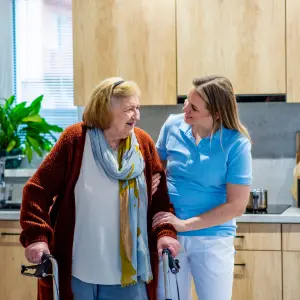
A professional caregiver is a trained patient-care worker who stays with a patient at home and manages the everyday tasks the patient can no longer manage alone. In Bangladesh you will also hear the terms patient attendant, patient caregiver, aya, or simply care staff — and in India the equivalent role is usually advertised as a “trained attendant” or “home attendant.”
The word doing the heavy lifting in that title is professional. A professional caregiver is not a housemaid who has been reassigned to sit beside a sick relative. The training is specific and physical:
What a professional caregiver is trained to do
- Safe transfer and lifting — moving a patient from bed to wheelchair to bathroom without injuring the patient’s spine, shoulder or hip, and without injuring themselves.
- Position changing — turning a bedridden patient every two hours to prevent pressure sores, which is the single most valuable thing a caregiver does for immobile patients.
- Bathing and toileting support — including bed baths, perineal hygiene, diaper changes and catheter bag emptying, done with dignity and infection awareness.
- Feeding assistance — soft diets, liquid diets, correct upright positioning to prevent choking, and patient encouragement when appetite has collapsed.
- Mobility and exercise support — walking practice, passive limb movement, and following the physiotherapist’s home programme between sessions.
- Medicine reminders — giving the prescribed tablet at the prescribed hour from a family-prepared box, and reporting missed or refused doses.
- Basic observation — noticing that the patient is unusually drowsy, that urine output has dropped, that a heel has turned red, that breathing sounds different — and escalating it.
- Companionship — conversation, routine, reassurance. For elderly and dementia patients this is not a soft extra; it is clinical value.
A good caregiver is the person who notices, at 3 a.m., that something is not right. That early alert is often worth more than any device in the room.
What a professional caregiver does not do
This is where families need absolute clarity. A caregiver does not give injections. Does not set up or run an IV line. Does not perform sterile wound dressing. Does not insert or change a catheter or a Ryles tube. Does not suction a tracheostomy. Does not decide whether a medicine should be increased, stopped or replaced. Does not interpret a falling oxygen reading and act on it clinically.
If any provider tells you their attendant “can also do injections”, walk away from that provider. That sentence is a red flag about the whole organisation, not a bonus feature.
Who Is a Home Nurse?
A home nurse is a qualified clinician who brings hospital-standard nursing into your living room. In Bangladesh, a genuine registered nurse has completed either a three-year Diploma in Nursing Science & Midwifery or a four-year BSc in Nursing, and holds a live registration with the Bangladesh Nursing & Midwifery Council (BNMC), renewed on schedule. That registration is verifiable — and you are entitled to see it before anyone touches your patient.
What a home nurse is qualified to do
- Administer injections — intramuscular, subcutaneous, insulin, prescribed antibiotics.
- Set up and monitor IV infusion — fluids, antibiotics, electrolytes — including cannula care and infiltration checks.
- Perform sterile wound dressing for surgical wounds, diabetic foot ulcers, pressure sores and burns.
- Manage urinary catheters — insertion where authorised, replacement, hygiene, infection prevention.
- Handle feeding tubes — Ryles tube and PEG tube feeding, flushing, aspiration checks and tube care.
- Provide tracheostomy care — suctioning, inner tube cleaning, airway monitoring.
- Record and interpret vital signs — blood pressure, pulse, temperature, respiratory rate, SpO₂ and blood glucose — and act on abnormal values.
- Execute the doctor’s treatment plan precisely, maintain a written nursing chart, and report changes to the treating physician.
- Recognise deterioration early — sepsis signs, silent chest infection, dehydration, hypoglycaemia — and initiate emergency escalation.
The skill nobody advertises
The most underrated ability a home nurse brings is clinical judgement. Two patients can have identical blood pressure readings; a trained nurse knows which one needs a phone call to the doctor tonight and which one can wait until the morning review. That judgement is built through years on hospital wards, and it cannot be substituted with kindness or willingness.
The Real Dividing Line: Scope of Practice
Forget job titles for a moment. The genuinely useful test is a question about the task, not the person:
Run your patient’s daily task list through that filter and the answer appears instantly. Bathing? Caregiver. Wound dressing? Nurse. Feeding a soft diet by spoon? Caregiver. Feeding through a PEG tube? Nurse. Reminding your father to take his 9 p.m. tablet? Caregiver. Adjusting his insulin because his sugar dropped to 3.9? Nurse — and a doctor’s instruction behind it.
Families in Mugda often describe this to us as “the needle line.” It is a crude phrase, but it works. The moment something breaks the skin, enters a tube, or requires a clinical decision, it crosses out of caregiver territory permanently.
Why This Difference Matters More Than Families Realise
1. Patient safety
An untrained hand performing a nursing task is not a small compromise. Non-sterile dressing turns a healing wound into an infected one. Wrong tube position turns a feed into aspiration pneumonia. An unmonitored IV line can infiltrate and damage tissue within hours. Hospitals readmit patients for exactly these preventable reasons every week in Dhaka.
2. Money — in both directions
Hiring a registered nurse around the clock for a patient who is medically stable is a large, avoidable expense that many families sustain for months out of anxiety. The reverse mistake is more expensive still: one preventable readmission usually costs more than several months of correct care.
3. Family burnout
When the hired professional cannot legally do half of what the patient needs, the family absorbs the gap. Daughters take unpaid leave. Sons drive across the city at midnight. Matching the professional to the need protects the family as much as the patient.
4. Legal and ethical accountability
Licensed nursing is regulated for a reason. If an unlicensed worker performs a clinical procedure and the patient is harmed, the family has almost no recourse — and no insurer, agency or council standing behind them.
Who Needs a Professional Caregiver?
Book a professional caregiver when your patient is medically stable but functionally dependent. Typical cases we handle across Dhaka:
- Elderly parents living alone, especially where the children live abroad or work full days.
- Patients recovering at home after the medical phase has passed — the wound is closed, the medicines are oral, the risk now is falls and poor nutrition.
- Bedridden patients who need turning, hygiene and feeding rather than procedures.
- Dementia and Alzheimer’s patients who need routine, supervision and gentle redirection — a caregiver who knows the person is worth more than any monitoring device.
- Parkinson’s patients who need mobility support, fall prevention and patience during slow tasks.
- Stroke survivors in the maintenance phase, doing daily exercises between physiotherapy visits.
- Post-discharge patients whose main risk is inactivity, dehydration and missed medicines.
- Palliative patients whose family wants constant, warm presence alongside scheduled nursing visits.
A family in Uttara Sector 12 came to us convinced their 82-year-old mother needed 24-hour skilled nursing. She had no lines, no tubes, no wounds — she had fallen twice in the bathroom. What she actually needed was a trained female caregiver on a 12-hour day shift and grab rails. Six months on, no further falls, and the family’s costs are a fraction of what they had budgeted.
Who Needs a Home Nurse Instead?
Book a home nurse when the patient has active medical needs:
- Fresh post-operative patients with drains, sutures or dressings due.
- Patients on IV antibiotics, fluids or infusion therapy.
- Anyone with a Ryles tube, PEG tube, tracheostomy or urinary catheter.
- ICU-discharged patients who remain fragile, oxygen-dependent or partially ventilated.
- Diabetic patients with foot ulcers, unstable sugars or insulin titration.
- Cancer patients during chemotherapy cycles, port care or complex pain management.
- Pressure sore (bedsore) patients at Grade 2 and above needing sterile dressing protocols.
- Patients whose condition is changing — new fever, falling oxygen, confusion, breathlessness.
If you are reading a list of medicines that includes an injection, or looking at any tube entering your patient’s body, your first call should be for a nurse — not an attendant.
Signs You Are Hiring the Wrong One
- You hired a caregiver, and the family is still doing the dressing changes yourselves from YouTube videos.
- You hired a nurse, and she spends most of her shift on the phone because there is genuinely nothing clinical to do.
- The attendant has been asked to “just push the injection” because the nurse’s visit was delayed.
- Nobody is writing anything down — no vitals chart, no medicine record, no shift notes.
- The patient has developed a new pressure sore under professional care.
- The provider could not produce a BNMC registration number when you asked.
- Your patient’s condition changed and the staff member did not know who to call first.
- Medicines are being given from memory rather than from a written schedule.
- The same person is on duty 24 hours a day with no relief — fatigue is a safety failure, not dedication.
- You feel you must supervise the professional constantly, which defeats the entire purpose.
Any one of these is a reason to reassess the arrangement today, not next month.
COST, VALUE AND THE MISTAKE OF CHOOSING BY PRICE
Home care pricing in Bangladesh varies by shift length, patient complexity, staff qualification and location. Caregiver services sit at the lower end, skilled nursing higher, and specialised critical care nursing highest — the same tiered structure you will find with established Indian providers such as Portea and Care24, and for the same reason: licensed clinical hours cost more than support hours everywhere in the world.
What families often miss is that the cheapest quote and the lowest total cost are rarely the same thing. Consider two households in Kazipara caring for similar bedridden patients. One hires the lowest-priced untrained helper available. Within seven weeks the patient has a Grade 3 pressure sore requiring dressings, antibiotics and a hospital visit. The second household pays more for a trained professional caregiver who turns the patient every two hours, and spends nothing on wound care at all.
A rational way to think about cost:
- Start from the tasks, never from the budget.
- Assign each task to the lowest-qualified professional who can safely perform it.
- Buy nursing hours by the procedure, not by the day, wherever the medical need is intermittent.
- Use caregiver hours to cover the long, low-intensity stretches — nights, mornings, meals.
- Review the plan every two weeks; needs shrink as patients recover, and your bill should shrink with them.
Any provider unwilling to reduce your package as your patient improves is selling hours, not care.
THE COMBINATION MODEL MOST DHAKA FAMILIES ACTUALLY NEED
Here is the part most comparison articles never mention: for the majority of long-term patients, “caregiver or nurse” is the wrong question. The right question is what mix, and in what proportion.
A realistic example. A 70-year-old stroke patient in Shantinagar is discharged with a Ryles tube, partial paralysis on the left side, and a healing sacral sore. The family assumed 24-hour nursing was the only option. The plan we built instead:
- Professional caregiver, 24 hours (two shifts): repositioning every two hours, hygiene, oral care, limb movement between physiotherapy sessions, feed preparation, observation and reporting.
- Registered nurse, twice daily visits: tube feeding, tube flushing and checks, sacral dressing, vitals charting, medicine administration.
- Physiotherapist, three sessions a week.
- Supervisor review, weekly, with the plan formally reassessed every fortnight.
Same clinical safety. Considerably lower monthly cost than round-the-clock skilled nursing. And a far better patient experience, because the person present at 4 a.m. is someone who knows how he likes his pillow.
That layered model — support hours plus clinical visits — is the standard we build for most families, and it is what we mean when we say a care plan should be designed, not ordered off a menu.
BENEFITS OF HIRING A PROFESSIONAL CAREGIVER
- Trained patient handling — safe lifting and transfers that protect the patient’s joints and spine.
- Pressure sore prevention through disciplined two-hourly repositioning.
- Reduced fall risk, the leading cause of serious injury among elderly patients at home.
- Better nutrition and hydration, because someone is present at every meal, unhurried.
- Consistent medicine timing from a written schedule, with refusals reported the same day.
- Early warning of deterioration — the person who sees your patient hourly notices change first.
- Preserved dignity during bathing, toileting and dressing.
- Emotional stability and companionship, which measurably improves recovery and mood.
- Family relief — spouses and adult children can sleep, work and stay well themselves.
- Faster functional recovery, since exercises actually get done between physiotherapy visits.
- Lower cost than skilled nursing for tasks that do not require a clinical licence.
- Continuity of care — the same familiar face, which matters enormously in dementia.
- Cleaner care environment, reducing infection risk around the bed and bathroom.
- Structured daily routine, which reduces agitation and improves sleep in elderly patients.
- Fewer avoidable hospital visits, and therefore lower total healthcare spending.
- Better communication with doctors, because the caregiver’s daily log answers the questions doctors always ask.
- Flexible shifts — day, night, 12-hour or 24-hour live-in, adjusted as needs change.
- Male or female staff by preference, respecting family comfort and religious values.
FEATURES OF OUR CAREGIVER AND HOME NURSING SERVICE
- 24/7 availability across Dhaka, including nights, weekends and holidays.
- BNMC-registered nurses — registration numbers available for verification on request.
- Trained, background-checked caregivers, screened for experience with your patient’s specific condition.
- Male and female staff for every service category.
- Free phone assessment before booking, with an honest recommendation — including when you need less than you think.
- Written, personalised care plan shared with the family before duty begins.
- Flexible shift structures — hourly visits, 8-hour, 12-hour, 24-hour live-in, or a combination.
- Emergency and same-day placement for urgent discharges.
- Daily documentation — vitals chart, intake-output log, medicine record, shift notes.
- Supervisor oversight, with scheduled review calls and unannounced quality checks.
- Prompt staff replacement if the fit is not right, at no extra charge and without argument.
- Specialised condition care — stroke, dementia, Parkinson’s, cancer, palliative, bedridden.
- Full clinical procedures at home — injections, IV infusion, wound dressing, catheter, Ryles and PEG tube, tracheostomy care.
- ICU setup at home with critical care nurses and monitoring equipment.
- Physiotherapy at home by licensed physiotherapists, coordinated with the care team.
- Doctor home visits and home diagnostic sample collection.
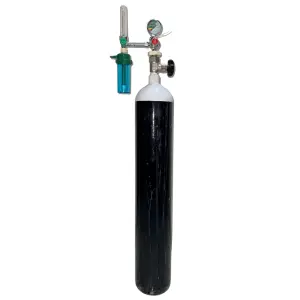
- Medical equipment rental — hospital bed, oxygen cylinder, oxygen concentrator, wheelchair, suction machine — with delivery and installation.
- Transparent, itemised pricing with no hidden charges.
- Confidential handling of all patient information.
- Coordination with your own doctor, following their treatment plan exactly.
HOW TO BOOK: STEP-BY-STEP PROCESS
Call or message us. Tell us the patient’s age, diagnosis, current condition and what the discharge summary says. Nights and holidays included; someone always answers.
Free needs assessment. Our coordinator, guided by a senior nurse, works through the task list with you: what the patient needs done, how often, and by whom. This is where we tell you honestly whether a professional caregiver, a nurse, or a combination is appropriate.
Written care plan and quotation. You receive the duty list, shift pattern, staff type and itemised price before committing. No verbal promises, no surprise additions.
Staff matching. We select by condition experience, gender preference, language comfort and location — the last one matters more than families expect, because a caregiver living near Bosila reaches a nearby patient reliably in Dhaka traffic.
Equipment arranged if needed. Hospital bed, air mattress, oxygen support or a wheelchair delivered and installed before duty starts.
Introduction and handover. The staff member arrives, meets the patient and family, reviews the medicine chart and discharge summary, and the first shift begins with clear expectations on both sides.
Daily reporting. Vitals, intake, output, medicines, mobility and mood are recorded each shift and shared with the family — a genuine advantage for children living abroad.
Supervision and review. A supervisor checks quality regularly and reassesses the plan every two weeks, scaling care up or down as the patient’s condition changes.
Ongoing support. Need to switch shifts, add a nurse visit, rent a concentrator, or replace a staff member? One phone number handles all of it.
A SAMPLE 24-HOUR CARE PLAN
Bedridden elderly patient, stable, one small pressure area, on oral medicines — caregiver-led with nurse review.
| Time | Care Activity | Who |
|---|---|---|
| 6:00 am | Waking, oral care, diaper change, position change | Caregiver |
| 7:00 am | Bed bath, skin inspection, fresh clothes | Caregiver |
| 8:00 am | Breakfast, upright positioning, morning medicines | Caregiver |
| 9:00 am | Vitals recorded; passive limb exercises | Caregiver |
| 10:00 am | Position change; sitting up supported | Caregiver |
| 11:00 am | Nurse visit — dressing review, vitals check, chart signed | Nurse |
| 12:00 pm | Position change; hydration | Caregiver |
| 1:00 pm | Lunch, medicines, oral care | Caregiver |
| 2:00 pm | Rest; room ventilated; linen check | Caregiver |
| 4:00 pm | Position change; light exercises; family video call | Caregiver |
| 6:00 pm | Evening snack; vitals; skin check | Caregiver |
| 8:00 pm | Dinner and medicines | Caregiver |
| 9:00 pm | Night hygiene, diaper change, position change | Caregiver |
| 11:00 pm – 5:00 am | Two-hourly position changes, diaper checks, sleep monitoring | Night caregiver |
Print this, adapt it to your patient, and stick it beside the bed. A visible plan is the simplest quality-control tool a family has.
SAFETY TIPS FOR FAMILIES
- Verify the licence before duty, not after a problem. Ask for the nurse’s BNMC registration number and the caregiver’s training certificate.
- Insist on written documentation. If nothing is being recorded, nothing can be reviewed.
- Never allow scope creep. If a nurse is delayed, the answer is to reschedule the procedure with medical advice — never to let the attendant attempt it.
- Keep an emergency card on the fridge: treating doctor’s number, nearest hospital, ambulance service, blood group, drug allergies, current medicine list.
- Protect the skin obsessively. Two-hourly turns, dry linen, no wrinkles under the hips, daily heel and sacrum inspection.
- Prepare medicines in a weekly box yourself where possible, so reminders cannot become dosing errors.
- Prevent falls physically — bathroom grab rails, non-slip mat, night light, clear floor, bed at low height.
- Follow basic infection control. Hand hygiene before and after every contact is, as the WHO and CDC both emphasise, the highest-value safety habit in home care.
- Do not allow 24-hour single-staff duty long term. Exhausted care is unsafe care; use two shifts.
- Trust your instinct. If you are uneasy about a staff member, request a replacement. A professional agency will arrange it without friction.
COMMON MISTAKES TO AVOID
- Hiring by price instead of by task. The cheapest option is often the most expensive outcome.
- Assuming “nurse” means the highest quality. A nurse doing bathing duty is an expensive mismatch, not premium care.
- Believing an attendant can “manage” a tube or an injection. They cannot, and asking places both patient and worker at risk.
- Skipping credential checks because the situation felt urgent.
- Hiring through informal contacts with no supervision, no replacement guarantee and no accountability.
- Never reassessing. Needs change weekly after discharge; static plans waste money or leave gaps.
- Excluding the treating doctor from the home care plan.
- Ignoring gender and language comfort, which quietly determines whether the patient cooperates at all.
- Loading household work onto a patient caregiver, which pulls attention away from the patient.
- Waiting for a crisis to arrange care. The best time to book is the day discharge is discussed, not the night it happens.
PROFESSIONAL ADVICE: HOW TO VERIFY A CAREGIVER OR NURSE IN BANGLADESH
Use this checklist before anyone starts duty. It takes ten minutes and prevents most home care disasters:
- Ask for the BNMC registration number for any nurse, and confirm the registration is current, not lapsed.
- Ask which nursing institute or college they trained at and for how many years they worked on a hospital ward.
- For caregivers, ask about condition-specific experience — “How many stroke patients have you handled?” is a better question than “Are you trained?”
- Confirm the agency is registered and holds records for its staff, including national ID verification.
- Ask who supervises the staff member, how often, and what happens at 2 a.m. if something goes wrong.
- Request the written duty list. Ambiguity is where disputes and gaps live.
- Clarify the replacement policy in advance — illness and absence happen everywhere.
- Insist on a trial period. Any confident provider will offer one.
- Check that the plan matches your doctor’s instructions line by line.
- Meet the staff member before the first shift wherever possible, even briefly by video.
Families who run this checklist rarely call us with problems later. Families who skip it sometimes call us to fix arrangements made elsewhere.
CONCLUSION
The difference between a professional caregiver and a home nurse is not seniority, and it is certainly not price. It is scope. A caregiver protects the patient’s daily life — the meals, the movement, the skin, the dignity, the hours nobody else can cover. A nurse protects the patient’s clinical safety — the procedures, the readings, the judgement calls that must not be guessed at.
Get the match right and home becomes the best place for your patient to be: familiar, calm, closely watched, and far cheaper than a hospital bed. Get it wrong and home becomes a risk. That is the entire decision, and it is easier than it looks once you write the task list down.
If you are holding a discharge summary right now and feeling unsure, do not guess. Tell us what the paper says, and we will tell you exactly which professional your patient needs — even when the honest answer is less than you were expecting to buy.
PEOPLE ALSO ASK
- What is the difference between a professional caregiver and a home nurse? A caregiver provides non-medical daily living support; a nurse is licensed to perform clinical procedures and monitor the patient’s medical condition.
- Can a caregiver give injections at home? No. Injections, IV therapy and all invasive procedures must be performed by a registered nurse.
- Is a home nurse better than a caregiver? Neither is better — they do different jobs. The right choice depends entirely on the patient’s tasks.
- How much does a caregiver cost in Dhaka? Rates depend on shift length, patient complexity and staff experience; caregiver services cost less than skilled nursing. Call for a written quote.
- Do I need a nurse or a caregiver after surgery? A nurse for the dressing and medication phase, usually shifting to a caregiver once the wound is stable.
- Can a caregiver stay 24 hours? Yes, live-in arrangements are available, though two shifts are safer for long-term care.
- Are home caregivers trained in Bangladesh? Professional caregivers from established agencies receive structured patient-handling training; informal helpers do not.
- Can I hire both a nurse and a caregiver together? Yes, and for long-term patients this combination is usually the most cost-effective safe option.
- How do I verify a home nurse’s qualification? Ask for the Bangladesh Nursing & Midwifery Council registration number and confirm it is current.
- Which is better for elderly parents — a nurse or a caregiver? For stable elderly parents, a professional caregiver is usually the right choice, with nurse visits as needed.
FREQUENTLY ASKED QUESTIONS
1. What exactly does a professional caregiver do? Bathing, feeding, toileting, position changes, mobility support, medicine reminders, basic observation and companionship — all the daily tasks a dependent patient cannot manage alone.
2. What can a home nurse do that a caregiver cannot? Injections, IV infusion, sterile wound dressing, catheter care, Ryles and PEG tube feeding, tracheostomy suctioning, clinical monitoring and emergency stabilisation.
3. My father is bedridden but has no tubes or wounds. Who do I need? A professional caregiver, with a nurse visit only if his condition changes. Physiotherapy is often worth adding.
4. My mother is on IV antibiotics for ten days. Who do I need? A registered nurse for the infusions, and a caregiver alongside if she also needs help with daily activities.
5. Can one person handle everything? A nurse can perform caregiving tasks, but paying nursing rates for bathing and feeding is inefficient. Most families use a combination.
6. Do you provide male and female staff? Yes — male and female nurses and caregivers are available for all shifts. Tell us your preference when booking.
7. How quickly can staff be arranged? Often the same day, and we handle emergency and next-morning discharges regularly across Dhaka.
8. Do I need a doctor’s prescription? For clinical nursing services we work from your doctor’s plan. Caregiver services need no prescription.
9. What if the staff member is not a good fit? Tell your supervisor and we replace them promptly, at no extra cost.
10. Are your nurses registered? Yes, our nurses hold Bangladesh Nursing & Midwifery Council registration, and we share registration details on request.
11. Can you provide care in a hospital as well as at home? Yes, patient attendants and private nurses can support your patient at the hospital bedside.
12. What shift options are available? Hourly visits, 8-hour, 12-hour, 24-hour live-in, or a custom mix of nurse visits plus caregiver hours.
13. Do you supply equipment too? Yes — hospital beds, air mattresses, oxygen cylinders, oxygen concentrators, wheelchairs and suction machines, with delivery and setup.
14. How is the care plan reviewed? A supervisor reassesses every two weeks, or immediately if the patient’s condition changes, and the plan and pricing are adjusted accordingly.
15. How do I start? Call Nursing Home Care Service or message us through describe the patient, and our coordinator will build the plan from there.